AI For Business Mit

AI For Business Mit — independent reviews, comparisons, pricing and step-by-step guides on Aizhi.

  • Histogram of oriented displacements

    Histogram of oriented displacements

    Histogram of oriented displacements (HOD) is a 2D trajectory descriptor. The trajectory is described using a histogram of the directions between each two consecutive points. Given a trajectory T = {P1, P2, P3, ..., Pn}, where Pt is the 2D position at time t. For each pair of positions Pt and Pt+1, calculate the direction angle θ(t, t+1). Value of θ is between 0 and 360. A histogram of the quantized values of θ is created. If the histogram is of 8 bins, the first bin represents all θs between 0 and 45. The histogram accumulates the lengths of the consecutive moves. For each θ, a specific histogram bin is determined. The length of the line between Pt and Pt+1 is then added to the specific histogram bin. To show the intuition behind the descriptor, consider the action of waving hands. At the end of the action, the hand falls down. When describing this down movement, the descriptor does not care about the position from which the hand started to fall. This fall will affect the histogram with the appropriate angles and lengths, regardless of the position where the hand started to fall. HOD records for each moving point: how much it moves in each range of directions. HOD has a clear physical interpretation. It proposes that, a simple way to describe the motion of an object, is to indicate how much distance it moves in each direction. If the movement in all directions are saved accurately, the movement can be repeated from the initial position to the final destination regardless of the displacements order. However, the temporal information will be lost, as the order of movements is not stored-this is what we solve by applying the temporal pyramid, as shown in section \ref{sec:temp-pyramid}. If the angles quantization range is small, classifiers that use the descriptor will overfit. Generalization needs some slack in directions-which can be done by increasing the quantization range.

    Read more →
  • Kaiming He

    Kaiming He

    Kaiming He (Chinese: 何恺明; pinyin: Hé Kǎimíng) is a Chinese computer scientist who primarily researches computer vision and deep learning. He is an associate professor at Massachusetts Institute of Technology and works part-time as a Distinguished Scientist at Google DeepMind. He is known as one of the creators of the residual neural network (ResNet) architecture. == Early life and education == He attended the public Guangzhou Zhixin High School in Guangzhou, Guangdong, China. He scored first place for the total scores in the 2003 Guangdong provincial undergraduate admissions exam. He went to Tsinghua University for undergraduate education and received a Bachelor of Science degree in 2007. In 2007 to 2011, he pursued doctoral studies in information engineering at the Chinese University of Hong Kong at its Multimedia Laboratory, receiving a PhD degree in 2011. His doctoral dissertation was titled Single image haze removal using dark channel prior (2011), and his doctoral adviser was Tang Xiao'ou. == Career == He worked at Microsoft Research Asia from 2011 to 2016 and at Facebook Artificial Intelligence Research from 2016 to 2024. In 2024, he became an associate professor at the Department of Electrical Engineering and Computer Science of the Massachusetts Institute of Technology. His 2016 paper Deep Residual Learning for Image Recognition is the most cited research paper in 5 years according to Google Scholar's reports in 2020 and 2021. == Awards and recognitions == He won ICCV's best paper award (Marr Prize) in 2017 and CVPR's best paper award in 2009 and 2016. He was awarded the 2023 Future Science Prize along with 3 collaborators for "fundamental contribution to artificial intelligence by introducing deep residual learning".

    Read more →
  • Janyce Wiebe

    Janyce Wiebe

    Janyce Marbury Wiebe (1959–2018) was an American computer science specializing in natural language processing and known for her work on subjectivity, sentiment analysis, opinion mining, discourse processing, and word-sense disambiguation. == Early life and education == Wiebe was born in 1959, in Albany, New York. She majored in English at the Binghamton University, graduating in 1981, and completed a Ph.D. in computer science in 1990, at the University at Buffalo. Her dissertation, Recognizing Subjective Sentences: A Computational Investigation of Narrative Text, was supervised by philosopher William J. Rapaport. == Career == After postdoctoral research at the University of Toronto, she became an assistant professor at New Mexico State University in 1992. In 2000, she moved to the University of Pittsburgh, where she became a professor of computer science and director of the Intelligent Systems Program. == Recognition == Wiebe was named a Fellow of the Association for Computational Linguistics in 2015. == Death == She died of leukemia on December 10, 2018.

    Read more →
  • Barney Pell

    Barney Pell

    Barney Pell (born March 18, 1968) is an American entrepreneur, angel investor and computer scientist. He was co-founder and CEO of Powerset, a pioneering natural language search startup, search strategist and architect for Microsoft's Bing search engine, a pioneer in the field of general game playing in artificial intelligence, and the architect of the first intelligent agent to fly onboard and control a spacecraft. He was co-founder, Vice Chairman and Chief Strategy Officer of Moon Express; co-founder and chairman of LocoMobi; and Associate Founder of Singularity University. == Career == === Education === Pell received his Bachelor of Science degree in symbolic systems from Stanford University in 1989, where he graduated Phi Beta Kappa and was a National Merit Scholar. Pell earned a PhD in computer science from Cambridge University in 1993, supervised by Stephen Pulman, where he was a Marshall Scholar. === Research === Pell's research is focused on basic problems in the study of intelligence, computer game playing, machine learning, natural language processing, autonomous robotics, and web search. Barney Pell has published over 30 technical papers on topics related to information retrieval, knowledge management, machine learning, artificial intelligence, and scheduling systems. In computer game playing and machine learning, he was a pioneer in the field of General Game Playing, and created programs to generate the rules of chess-like games and programs to play individual games directly from the rules without human assistance. He also did early work on machine learning in the game of Go and on an architecture for pragmatic reasoning for bidding in the game of Bridge. In natural language processing, he was a scientist in the Artificial Intelligence Center at SRI International, where he worked on the Core Language Engine. Barney Pell was the Technical Area Manager of the Collaborative and Assistant Systems area within the Computational Sciences Division (now the Intelligent Systems Division) at NASA Ames Research Center, where he oversaw a staff of 80 scientists working on information retrieval, search, knowledge management, machine learning, semantic technology, human centered systems, collaboration technology, adaptive user interfaces, human robot interaction, and other areas of artificial intelligence. From 1993 to 1998, Barney Pell worked as a Principal Investigator and Senior Computer Scientist at NASA Ames, where he conducted advanced research and development of autonomous control software for NASA's deep space missions. He was the Architect for the Deep Space One Remote Agent Experiment and the Project Lead for the Executive component of the Remote Agent Experiment, the first intelligent agent to fly onboard and control a spacecraft. === Business === Pell is an entrepreneur who has founded or co-founded several business ventures, including Powerset, Moon Express, and LocoMobi. He was the founder and CEO of Powerset, a San Francisco startup company that built a search engine based on natural language processing technology originally developed at XEROX PARC. On May 11, 2008, the company unveiled a tool for searching a fixed subset of Wikipedia using conversational phrases rather than keywords. On July 1, 2008, Microsoft signed an agreement to acquire Powerset for an estimated $100 million. Powerset became a part of Microsoft's search engine, Bing. From 2008 until August 2011, Pell served as Partner, Search Strategist, and Evangelist for Microsoft's search engine, Bing and as Head of Bing's Local and Mobile Search teams. Prior to joining Powerset, Pell was an Entrepreneur-in-Residence at Mayfield Fund, a venture capital firm in Silicon Valley. Pell is also a founder of Moon Express, Inc., a U.S. company awarded a $10M commercial lunar contract by NASA and a competitor in the Google Lunar X PRIZE. Pell was also co-founder and chairman of LocoMobi, Inc., a U.S. company developing mobile, software and hardware technology solutions for the parking industry. LocoMobi was winner of the Tie50 Award in 2014. Pell is also an associate founder of Singularity University and a Machine Learning Fellow at the Creative Destruction Lab at the Rotman School of Management From 1998 to 2000, Pell served as chief strategist and vice president of business development at StockMaster.com (acquired by Red Herring in March, 2000). From 2000 to 2002, Pell was Chief Strategist and Vice President of Business Development for Whizbang Labs. Pell has been an angel investor and advisor to numerous startup companies, including Pulse.io (acquired by Google), Aardvark (acquired by Google), Appjet (acquired by Google), Jibe Mobile (acquired by Google), Movity (acquired by Trulia), QuestBridge, BrandYourself, CrowdFlower (acquired by Appen), and LinkedIn. === Views and predictions === Pell has expressed views and predictions regarding technological advancements in coming years. He believes that humans will soon have "brain-machine interfaces that will let people interact with each other as if they had 'hangouts' in their mind." Pell predicts these interfaces to become available within 20 to 30 years. Pell also predicts advancements in bodily augmentation, such as "even-better-than-human prosthetics and high-quality tissue engineering within 10 years." Pell believes that with advancements in space exploration technology the moon will soon be a commercially viable resource for material such as platinum and water. == Awards and recognition == In 1986, Pell was awarded a National Merit Scholarship. In 1989, Pell was awarded a Marshall Scholarship. In 1989, Pell was elected Phi Beta Kappa. In 1997, Pell was part of the team award a NASA Software of the Year Award for the Deep Space 1 Remote Agent.

    Read more →
  • Weak artificial intelligence

    Weak artificial intelligence

    Weak artificial intelligence (weak AI) is artificial intelligence that implements a limited part of the mind, or, as narrow AI, artificial narrow intelligence (ANI), is focused on one narrow task. Weak AI is contrasted with strong AI, which can be interpreted in various ways: Artificial general intelligence (AGI): a machine with the ability to apply intelligence to any problem, rather than just one specific problem. Artificial superintelligence (ASI): a machine with a vastly superior intelligence to the average human being. Artificial consciousness: a machine that has consciousness, sentience and mind (John Searle uses "strong AI" in this sense). Narrow AI can be classified as being "limited to a single, narrowly defined task. Most modern AI systems would be classified in this category." Artificial general intelligence is conversely the opposite. == Applications and risks == Some examples of narrow AI are AlphaGo, self-driving cars, robot systems used in the medical field, and diagnostic doctors. Narrow AI systems are sometimes dangerous if unreliable. And the behavior that it follows can become inconsistent. It could be difficult for the AI to grasp complex patterns and get to a solution that works reliably in various environments. This "brittleness" can cause it to fail in unpredictable ways. Narrow AI failures can sometimes have significant consequences. It could for example cause disruptions in the electric grid, damage nuclear power plants, cause global economic problems, and misdirect autonomous vehicles. Medicines could be incorrectly sorted and distributed. Also, medical diagnoses can ultimately have serious and sometimes deadly consequences if the AI is faulty or biased. Simple AI programs have already worked their way into society, oftentimes unnoticed by the public. Autocorrection for typing, speech recognition for speech-to-text programs, and vast expansions in the data science fields are examples. Narrow AI has also been the subject of some controversy, including resulting in unfair prison sentences, discrimination against women in the workplace for hiring, resulting in death via autonomous driving, among other cases. Despite being "narrow" AI, recommender systems are efficient at predicting user reactions based on their posts, patterns, or trends. For instance, TikTok's "For You" algorithm can determine a user's interests or preferences in less than an hour. Some other social media AI systems are used to detect bots that may be involved in propaganda or other potentially malicious activities. == Weak AI versus strong AI == John Searle contests the possibility of strong AI (by which he means conscious AI). He further believes that the Turing test (created by Alan Turing and originally called the "imitation game", used to assess whether a machine can converse indistinguishably from a human) is not accurate or appropriate for testing whether an AI is "strong". Scholars such as Antonio Lieto have argued that the current research on both AI and cognitive modelling are perfectly aligned with the weak-AI hypothesis (that should not be confused with the "general" vs "narrow" AI distinction) and that the popular assumption that cognitively inspired AI systems espouse the strong AI hypothesis is ill-posed and problematic since "artificial models of brain and mind can be used to understand mental phenomena without pretending that that they are the real phenomena that they are modelling" (as, on the other hand, implied by the strong AI assumption).

    Read more →
  • Georgetown–IBM experiment

    Georgetown–IBM experiment

    The Georgetown–IBM experiment was an influential demonstration of machine translation, which was performed on January 7, 1954. Developed jointly by Georgetown University and IBM, the experiment involved completely automatic translation of more than sixty Russian sentences into English. == Background == Conceived and performed primarily in order to attract governmental and public interest and funding by showing the possibilities of machine translation, it was by no means a fully featured system: It had only six grammar rules and 250 lexical items in its vocabulary (of stems and endings). Words in the vocabulary were in the fields of politics, law, mathematics, chemistry, metallurgy, communications and military affairs. Vocabulary was punched onto punch cards. This complete dictionary was never fully shown (only the extended one from Garvin's article). Apart from general topics, the system was specialized in the domain of organic chemistry. The translation was carried out using an IBM 701 mainframe computer (launched in April 1953). The Georgetown-IBM experiment is the best-known result of the MIT conference in June 1952 to which all active researchers in the machine translation field were invited. At the conference, Duncan Harkin from US Department of Defense suggested that his department would finance a new machine translation project. Jerome Weisner supported the idea and offered finance from the Research Laboratory of Electronics at MIT. Leon Dostert had been invited to the project for his previous experience with the automatic correction of translations (back then 'mechanical translation'); his interpretation system had a strong impact on the Nuremberg War Crimes Tribunal. The linguistics part of the demonstration was carried out for the most part by linguist Paul Garvin who had also good knowledge of Russian. Over 60 Romanized Russian statements from a wide range of political, legal, mathematical, and scientific topics were entered into the machine by a computer operator who knew no Russian, and the resulting English translations appeared on a printer. The sentences to be translated were carefully selected. Many operations for the demonstration were fitted to specific words and sentences. In addition, there was no relational or sentence analysis which could recognize the sentence structure. The approach was mostly 'lexicographical' based on a dictionary where a specific word had a connection with specific rules and steps. == Algorithm == The algorithm first translates Russian words into numerical codes, then performs the following case-analysis on each numerical code to choose between possible English word translations, reorder the English words, or omit some English words. The flowchart of the algorithm is reproduced in (see Table 1 for the 6 rules). == Translation examples == How it analyzes Vyelyichyina ugla opryedyelyayetsya otnoshyenyiyem dlyini dugi k radyiusu (figure 2 of ). == Reception == Well publicized by journalists and perceived as a success, the experiment did encourage governments to invest in computational linguistics. The authors claimed that within three or five years, machine translation could well be a solved problem. However, the real progress was much slower, and after the ALPAC report in 1966, which found that the ten years of long research had failed to fulfill the expectations, funding was reduced dramatically. The demonstration was given widespread coverage in the foreign press, but only a small fraction of journalists drew attention to previous machine translation attempts.

    Read more →
  • Aslı Çelikyılmaz

    Aslı Çelikyılmaz

    Aslı Çelikyılmaz is an engineer specializing in natural language processing, and particularly in natural language generation for software agents with advanced reasoning and real-world modeling capabilities. Educated in Turkey and Canada, she works in the US as senior research lead at Fundamentals AI Research, Meta. She also holds an affiliate faculty position in computer science at the University of Washington, and is co-editor-in-chief of the journal Transactions of the Association for Computational Linguistics. == Education and career == Çelikyılmaz is a 1997 graduate of Istanbul Technical University, where she studied industrial engineering. After a 2002 master's degree in computer and information science from Seneca Polytechnic in Toronto, and a second master's degree in information science from the University of Toronto in 2005, she completed a Ph.D. in information science at the University of Toronto in 2008. She worked as a postdoctoral researcher in California, at the University of California, Berkeley, from 2008 to 2010. In 2010 she joined Microsoft in Sunnyvale, California, where she became a senior scientist and later a senior principal researcher in Redmond, Washington. She added her affiliation with the University of Washington in 2018, and moved to Meta in Seattle in 2021. == Recognition == Çelikyılmaz was named to the 2026 class of IEEE Fellows, "for contributions to conversational systems and language generation".

    Read more →
  • Yaron Singer

    Yaron Singer

    Yaron Singer is a computer scientist and entrepreneur whose work has focused on algorithms, machine learning, optimization, and artificial intelligence security. He was the Gordon McKay Professor of Computer Science and Applied Mathematics at Harvard University and co-founded Robust Intelligence, an artificial intelligence security company acquired by Cisco Systems in 2024. == Education == Singer received a PhD in computer science from the University of California, Berkeley under the supervision of Christos Papadimitriou. == Academic career == Singer was a postdoctoral research scientist at Google Research. Singer joined the computer science faculty at Harvard John A. Paulson School of Engineering and Applied Sciences in 2013 and became a full professor in 2019. == Research == Singer's research has focused on algorithms and machine learning, including optimization, algorithmic mechanism design, and adversarial machine learning. His doctoral work studied computational limits in algorithmic mechanism design, including truthful mechanisms and budget-feasible mechanisms. In optimization, Singer co-authored work on submodular optimization and parallel algorithms for large-scale data processing. Singer has also worked on adversarial machine learning, including attacks that use small perturbations or noise to affect the behavior of machine learning systems. == Entrepreneurship == In 2020, Singer co-founded Robust Intelligence Kojin Oshiba. Harvard SEAS reported that the company raised $14 million that year, and TechCrunch reported in 2021 that the company raised a $30 million Series B round led by Tiger Global. The company developed tools for testing AI models and detecting failures before or during deployment. TechCrunch described its RIME product as using an "AI firewall" to stress-test models. In 2024, Cisco Systems acquired Robust Intelligence. CTech reported that Cisco had not disclosed the purchase amount when the acquisition was announced, and later reported the deal value as $400 million. In 2025, Cisco launched Foundation AI, a Cisco team focused on AI for cybersecurity. Techzine reported that Singer led the team and was Cisco's VP of AI and Security. == Recognition == Singer has received a Sloan Research Fellowship, an NSF CAREER Award, a Google Faculty Research Award, and a Facebook Faculty Award. As a graduate student, he received Microsoft Research and Facebook fellowships. In 2012, he received the Best Student Paper Award at the ACM International Conference on Web Search and Data Mining for "How to Win Friends and Influence People, Truthfully: Influence Maximization Mechanisms for Social Networks."

    Read more →
  • Ideonomy

    Ideonomy

    Ideonomy is a combinatorial "science of ideas" developed by American independent scholar Patrick M. Gunkel (1947–2017). Specifically, Ideonomy is concerned with the systematic organization of ideas and the discovery of the rules behind how ideas combine, diverge, and transform. Gunkel defined ideonomy as "the science of the laws of ideas and of the application of such laws to the generation of all possible ideas in connection with any subject, idea, or thing." In his 1992 book A History of Knowledge, Charles Van Doren compared ideonomy to a "mining operation" that excavates meanings and thought to discover treasures hidden deep within language. Sources from the 1980s and 1990s demonstrate that ideonomy was useful to academic researchers in fields including biology, toxicology, and nursing/patient care. Beginning in the 2010s, academics in a wide range of fields including machine learning, marketing, computational modeling, and cybersecurity have relied on materials generated for ideonomy to provide methodological support for their research. == Etymology and definition == The word "ideonomy" combines the Greek roots ideo- (from idea, meaning pattern or form) and -nomy (from nomos, meaning law or custom). The suffix -nomy suggests the laws concerning or the totality of knowledge about a given subject, as in astronomy or taxonomy. In a note posted on the MIT ideonomy website, Gunkel states that the word was supposedly first coined by the French Encyclopedists to refer to a science of ideas. No evidence is provided for this statement, however. The concept bears some relationship to Antoine Destutt de Tracy's "ideology" (1796), which originally meant a systematic science of ideas before acquiring its modern political connotations. Gunkel provided several metaphorical descriptions of ideonomy: An "idea bank": a computer network enabling systematic exploration of infinite possible ideas A "kaleidoscope" that can exhibit all possible combinations and transformations of ideas A "prism" capable of diffracting any idea into its cognitive components A "gigantic microscope for magnifying the ideocosm" == History and development == In 1984, Gunkel received a five-year unsolicited grant from the Richard Lounsbery Foundation of New York to develop ideonomy. A June 1, 1987 article on the front page of The Wall Street Journal brought Gunkel and ideonomy to wider public attention. Some academics were interested in using ideonomy's techniques, including biologist Betsey Dyer, who published several contemporaneous peer-reviewed studies citing ideonomy. Academic researchers in the field of toxicology and nursing/patient care also used ideonomy. However, ideonomy's broadest contribution to date came beginning in the 2010s, as a list of personality traits generated for combinatorial matching was used by researchers in artificial intelligence to code human emotions for machine-learning tasks, develop computational models related to personality, develop a measurement framework for influencer-brand recommender systems, and aid information awareness/cybersecurity assessment. == Methodology == The foundational empirical method of ideonomy involves the systematic creation of extensive lists. Gunkel's apartment reportedly contained thousands of lists on every conceivable topic. Gunkel termed each list an "organon," which he described as expanding through "combination, permutation, transformation, generalization, specialization, intersection, interaction, reapplication, recursive use, etc. of existing organons." The ideonomic process follows a progressive structure. The ideonomist begins with a simple list of examples of a particular idea, concept, or thing. The list need not be exhaustive. By studying this list, the ideonomist isolates and identifies types. This categorical analysis then reveals missing items, allowing the primary list to be improved and refined. Gunkel emphasized that list items must not only cover genuine categories of nature but also be formulated in ways that yield the largest possible number of syntactically coherent possibilities when combined. The core technique of ideonomy is "ideocombinatorics"—the systematic intersection and combination of items from different lists to generate novel composite concepts. Gunkel developed computer programs to automate this process. For example, combining a list of 230 Universal Elementary Shapes (pits, pyramids, trenches, hemispheres, needles) with a list of 74 Types of Order (recurrence, identity, likeness of parts) yields 17,020 possible "shapes of order." These combinations, when phrased as questions ("Can there be pits of recurrence?"), could suggest new categories of phenomena worthy of investigation. The computer-generated output is typically repetitive and often meaningless. However, with sufficient frequency, the combinations yield results that are unexpectedly interesting and fruitful. In one documented case, Gunkel's programs generated 45,540 questions about toxins for microbiologist David Bermudes. One question—"Can hierarchies of cell process be used as a basis for classifying toxic action?"—prompted Bermudes to develop a novel approach to classifying biological toxins by the type of molecule they attack, rather than by chemical structure or physiological system affected. According to one contemporaneous account of ideonomy, "Gunkel takes for his field all fields and all ideas about anything. He uses a computer to generate lists of words and phrases and by juxtaposition reviews the resultant patterns for novel ideas. The computer is ideal for this task because the mind would rebel at the formidable processing task ideonomy involves. What we have here is computer generated originality." == Applications == Gunkel and his supporters identified several practical applications for ideonomic methods: Scientific research: Biologist Betsey Dyer of Wheaton College published research crediting ideonomy for helping to generate ideas. Medical science: When Austin pathologist Michael T. O'Brien was presented with the ideonomically-generated question "Can arteries have rashes?", he initially dismissed it as nonsense. Upon reflection, he realized that large arteries are supplied with blood by tiny vessels that might become inflamed and dilated, analogous to skin vessels in a rash—a phenomenon potentially worth researching. Analogical thinking: Harvard law professor Robert Clark used ideonomic analogies to write a research paper comparing plant structure with human hierarchies. Artificial intelligence: Douglas Lenat, a researcher at Microelectronics and Computer Technology Corporation (MCC) in Austin, suggested that Gunkel's lists enumerating types of human mistakes could help design AI systems capable of recognizing and correcting their own errors. == Reception and criticism == Ideonomy received mixed reactions from the academic and scientific communities. Prominent supporters included: Edward Fredkin, former director of MIT's computer science laboratory, who praised Gunkel's "provocative ideas on artificial intelligence." Marvin Minsky, AI scientist and MIT professor, who described ideonomy as "perhaps the most extensive study of ways to generate ideas." Frederick Seitz, president emeritus of Rockefeller University, who noted Gunkel's "encyclopedic scope" Robert C. Clark, Harvard law professor, who called Gunkel "the most intelligent person I ever met" However, skeptics questioned whether ideonomy constituted a genuine science. Fredkin himself noted that Gunkel "pours out about 60 ideas a minute, and 59 of them are bad," though he added that "even with one good idea out of 60, it's still an amazing accomplishment." Douglas Lenat observed that brainstorming with Gunkel was "a bit like being hit over the head by the muse with a sledgehammer" and that "he puts people off." Gunkel himself acknowledged that ideonomy was in its infancy and might seem "absurdly utopian." His planned magnum opus on ideonomy remained incomplete, and was posted on an MIT website thanks to faculty advisor Whitman Richards. Gunkel wrote: "Pioneering in a completely new field, yes in a new science, is almost unreal. It is heartbreaking, it is pitiable, it is almost inhuman. Honestly, it is a hell. There is nothing heroic about it." == Related concepts == Gunkel identified several historical precedents for ideonomic thinking: Gottfried Wilhelm Leibniz (1646–1716): The philosopher's work on a universal characteristic (characteristica universalis) and calculus of reasoning Peter Mark Roget (1779–1869): Creator of Roget's Thesaurus, which organized concepts into a systematic taxonomy Dmitri Mendeleev (1834–1907): Developer of the periodic table, demonstrating how combining lists of element families could reveal previously unseen connections Fritz Zwicky (1898–1974): The Caltech astrophysicist whom Gunkel called the "grandfather of ideonomy" for his development of "morphological research"—systematic exploration of all possible solutions t

    Read more →
  • Phraselator

    Phraselator

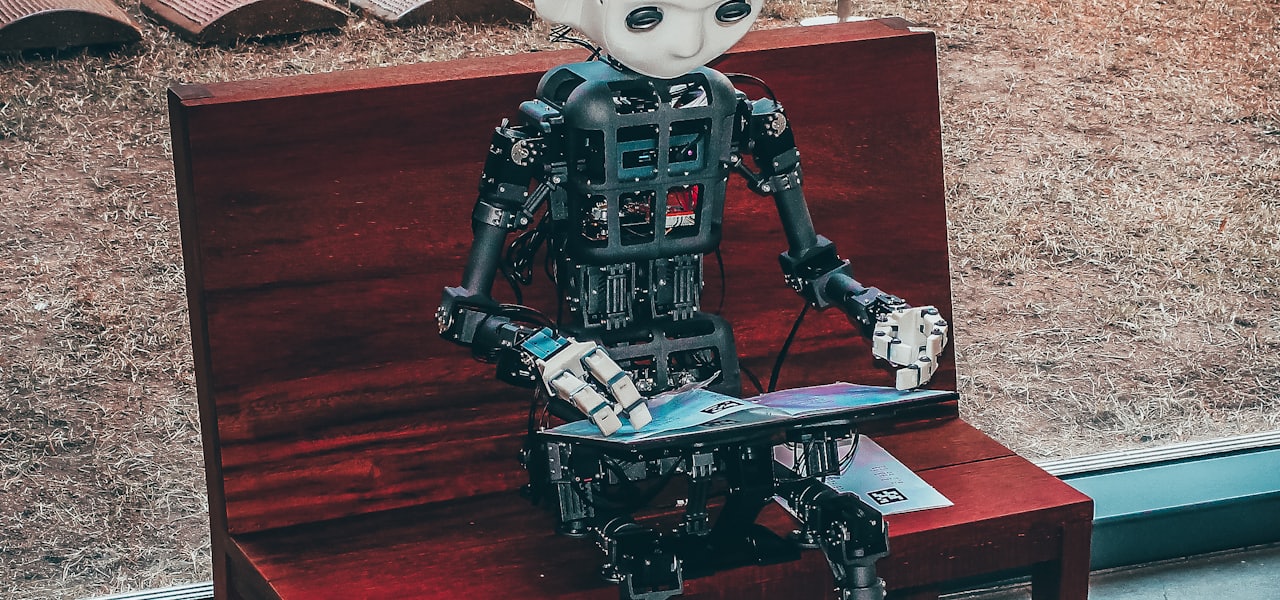
    The Phraselator is a weatherproof handheld language translation device developed by Applied Data Systems and VoxTec, a former division of the military contractor Marine Acoustics, located in Annapolis, Maryland, USA. It was designed to serve as a handheld computer device that translates English into one of 40 different languages. == The device == The Phraselator is a small speech translation PDA-sized device designed to aid in interpretation. The device does not produce synthesized speech like that utilized by Stephen Hawking; instead, it plays pre-recorded foreign language MP3 files. Users can select the phrase they wish to convey from an English list on the screen or speak into the device. It then uses speech recognition technology called DynaSpeak, developed by SRI International, to play the proper sound file. The accuracy of the speech recognition software is over 70 percent according to software developer Jack Buchanan. The device can also record replies for translation later. Pre-recorded phrases are stored on Secure Digital flash memory cards. A 128 MB card can hold up to 12,000 phrases in four or five languages. Users can download phrase modules from the official website, which contained over 300,000 phrases as of March 2005. Users can also construct their own custom phrase modules. Earlier devices were known to have run on an SA-1110 Strong Arm 206 MHz CPU with 32MB SDRAM and 32MB onboard Flash RAM. A newer model, the P2, was released in 2004 and developed according to feedback from U.S. soldiers. It translates one way from English to approximately 60 other languages. It has a directional microphone, a larger library of phrases and a longer battery life. The 2004 release was created by and utilizes a computer board manufactured by InHand Electronics, Inc. In the future, the device will be able to display pictures so users can ask questions such as "Have you seen this person?" Developer Ace Sarich notes that the device is inferior to human interpreter. Conclusions derived from a Nepal field test conducted by U.S. and Nepal based NGO Himalayan Aid in 2004 seemed to confirm Sarich's comparisons: The very concept of using a machine as a communication point between individuals seemed to actually encourage a more limited form of interaction between tester and respondent. Usually, when limited language skills are present between parties, the genuine struggle and desire to communicate acts as a display of good will – we openly display our weakness in this regard – and the result is a more relaxed and human encounter. This was not necessarily present with the Phraselator as all parties abandoned learning about each other and instead focused on learning how to work with the device. As a tool for bridging any cultural differences or communicating effectively at any length, the Phraselator would not be recommended. This device, at least in the form tested, would best be used in large-scale operations where there is no time for language training and there is a need to communicate fixed ideas, quickly, over the greatest distance by employing large amounts of unskilled users. Large humanitarian or natural disasters in remote areas of third-world countries might be an effective example. == Origin == The original idea for the device came from Lee Morin, a Navy doctor in Operation Desert Storm. To communicate with patients, he played Arabic audio files from his laptop. He informed Ace Sarich, the vice president of VoxTec, about the idea. VoxTec won a DARPA Small Business Innovation Research grant in early 2001 to develop a military-grade handheld phrase translator. During its development, the Phraselator was tested and evaluated by scientists from the Army Research Laboratory. The device was first field tested in Afghanistan in 2001. By 2002, about 500 Phraselators were built for soldiers around the world with another 250 ordered by the U.S. Special Forces. The device cost $2000 to develop and could convert spoken English into one of 200,000 recorded commands and questions in 30 languages. However, the device could only translate one-way. At the time, the only existing two-way voice translator that could convert speech back and forth between languages was the Audio Voice Translation Guide System, or TONGUES, which was developed by Carnegie Mellon University for Lockheed Martin. As part of a DARPA program known as the Spoken Language Communication and Translation System for Tactical Use, SRI International has further developed two-way translation software for use in Iraq called IraqComm in 2006 which contains a vocabulary of 40,000 English words and 50,000 words in Iraqi Arabic. == Notable users == The handheld translator was recently used by U.S. troops while providing relief to tsunami victims in early 2005. About 500 prototypes of the device were provided to U.S. military forces in Operation Enduring Freedom. Units loaded with Haitian dialects have been provided to U.S. troops in Haiti. Army military police have used it in Kandahar to communicate with POWs. In late 2004, the U.S. Navy began to augment some ships with a version of the device attached to large speakers in order to broadcast clear voice instructions up to 400 yards (370 m) away. Corrections officers and law enforcement in Oneida County, New York, have tested the device. Hospital emergency rooms and health departments have also evaluated it. Several Native American tribes such as the Choctaw Nation, the Ponca, and the Comanche Nation have also used the device to preserve their dying languages. Various law enforcement agencies, such as the Los Angeles Police Department, also use the phraselator in their patrol cars. == Awards == In March 2004, DARPA director Dr. Tony Tether presented the Small Business Innovative Research Award to the VoxTec division of Marine Acoustics at DARPATech 2004 in Anaheim, CA. The device was recently listed as one of "Ten Emerging Technologies That Will Change Your World" in MIT's Technology Review. == Pop culture == Software developer Jack Buchanan believes that building a device similar to the fictional universal translator seen in Star Trek would be harder than building the Enterprise. The device was mentioned in a list of "Top 10 Star Trek Tech" on Space.com.

    Read more →
  • Multiline optical-character reader

    Multiline optical-character reader

    A multiline optical-character reader, or MLOCR, is a type of mail sorting machine that uses optical character recognition (OCR) technology to determine how to route mail through the postal system. MLOCRs work by capturing images of the front of letter-sized mailpieces, and extracting the entire address from each piece. It looks up the postal code within each address in a master database, prints a barcode representing this information on the mailpiece, and performs an initial sort. All of this occurs in a fraction of a second as the mailpiece passes through the machine. After this point, mail is further sorted by barcode sorters that read this barcode to determine its destination throughout its journey all the way down to the walk sequence of the mail carrier. The United States Postal Service has used remote bar coding since 1992. In the United States, if the MLOCR is not able to decode the address, then the mailpiece is placed on "hold" by printing a unique fluorescent barcode on the back of the mailpiece, and the mailpiece is then set aside for further processing by the Remote Bar Coding System (formerly called Remote Video Encoding). An image of the mailpiece is sent to a Remote Encoding Center where a human data conversion operator manually inspects the image. The operator converts the information on the mailpiece into abbreviated codes and enters the data into the computer. This data is sent back to the MLOCR site where it is matched with the unique barcode on the back of the un-coded mailpiece, and a barcode is then printed on the mailpiece like the rest of the mail. All this effort is invested up front into deciphering the destination of each mailpiece and printing the correct barcode, so that the mailpiece will never need to be manually examined again until it reaches the hands of the letter carrier who will carry it to the final delivery point. A Delivery Bar Code Sorter is repeatedly used at each point in the USPS system to read the barcode and sort the mailpiece to a tray corresponding to the next leg of its journey towards its final destination. The United States Postal Service is the largest user of these machines; however, large volume mailers and mail consolidators also have their own MLOCR systems to barcode outgoing mail in order to receive significant postage discounts. An option called FASTforward can be added to an MLOCR that allows it to automatically forward mail to a new address. This additional computer hardware/software combination looks up decoded addresses in the National Change of Address database to see if the recipient has recently moved. If so, a POSTNET barcode representing the new address is sprayed on the mailpiece thus routing it to new address although the old address is still visible—a testament to the degree at which mail can be mechanically sorted. Generally, all OCR-equipped letter sorting machines ordered since the late 1980s have been equipped with OCR systems capable of reading multiple lines of address.

    Read more →
  • Timo Honkela

    Timo Honkela

    Timo Untamo Honkela (August 4, 1962 – May 9, 2020) was a computer scientist at the University of Helsinki, Aalto University School of Science and Aalto University School of Art, Design and Architecture. He holds a PhD from Helsinki University of Technology. From 2014 until 2018 he held a fixed-term professorship at the University of Helsinki. Before joining the University of Helsinki he worked as a non-tenured professor in two Schools of the Aalto University, The School of Art, Design and Architecture and the School of Science. He has presented his thoughts on his studies and work in the joint blog 375 Humanists. Timo Honkela conducted research on several areas related to knowledge engineering, cognitive modeling and natural language processing. Honkela was born in Kalajoki. From 1998 to 2000 he worked as a professor in the Aalto Media Lab. To the media Lab Honkela brought his expertise in Kohonen self-organising map (SOM) and worked closely with artist and designers around the topic. In 2001 Honkela collaborated with George Legrady to produce an interactive museum installation, Pockets Full of Memories to the Centre Georges Pompidou, National Museum of Modern Art in Paris. The concept, created by Legrady, provided for visitors a possibility to scan their own objects to a database and then organise them by Kohonen Self-Organizing Map algorithm. In 2017 Honkela published a book in Finnish. The book Rauhankone (English: Peace Machine) presents his idea of designing artificial intelligence and machine learning to serve humanity, in practice to help people to live in peace with each other. He died in Helsinki. == Publications == Timo Honkela, Wlodzislaw Duch, Mark Girolami and Samuel Kaski (editors): Artificial Neural Networks and Machine Learning, Springer, 2011. Jorma Laaksonen and Timo Honkela (editors): Advances in Self-Organizing Maps, Springer, 2011. Timo Honkela: Rauhankone. Gaudeamus, 2017.

    Read more →
  • Retained mode

    Retained mode

    Retained mode in computer graphics is a major pattern of API design in graphics libraries, in which the graphics library, instead of the client, retains the scene (complete object model of the rendering primitives) to be rendered and the client calls into the graphics library do not directly cause actual rendering, but make use of extensive indirection to resources, managed – thus retained – by the graphics library. It does not preclude the use of double-buffering. Immediate mode is an alternative approach. Historically, retained mode has been the dominant style in GUI libraries; however, both can coexist in the same library and are not necessarily exclusionary in practice. == Overview == In retained mode the client calls do not directly cause actual rendering, but instead update an abstract internal model (typically a list of objects) which is maintained within the library's data space. This allows the library to optimize when actual rendering takes place along with the processing of related objects. Some techniques to optimize rendering include: managing double buffering treatment of hidden surfaces by backface culling/occlusion culling (Z-buffering) only transferring data that has changed from one frame to the next from the application to the library Example of coexistence with immediate mode in the same library is OpenGL. OpenGL has immediate mode functions that can use previously defined server side objects (textures, vertex buffers and index buffers, shaders, etc.) without resending unchanged data. Examples of retained mode rendering systems include Windows Presentation Foundation, SceneKit on macOS, and PHIGS.

    Read more →
  • Lex (software)

    Lex (software)

    Lex is a computer program that generates lexical analyzers ("scanners" or "lexers"). It is commonly used with the yacc parser generator and is the standard lexical analyzer generator on many Unix and Unix-like systems. An equivalent tool is specified as part of the POSIX standard. Lex reads an input stream specifying the lexical analyzer and writes source code which implements the lexical analyzer in the C programming language. In addition to C, some old versions of Lex could generate a lexer in Ratfor. == History == Lex was originally written by Mike Lesk and Eric Schmidt and described in 1975. In the following years, Lex became the standard lexical analyzer generator on many Unix and Unix-like systems. In 1983, Lex was one of several UNIX tools available for Charles River Data Systems' UNOS operating system under the Bell Laboratories license. Although originally distributed as proprietary software, some versions of Lex are now open-source. Open-source versions of Lex, based on the original proprietary code, are now distributed with open-source operating systems such as OpenSolaris and Plan 9 from Bell Labs. One popular open-source version of Lex, called flex, or the "fast lexical analyzer", is not derived from proprietary coding. == Structure of a Lex file == The structure of a Lex file is intentionally similar to that of a yacc file: files are divided into three sections, separated by lines that contain only two percent signs, as follows: The definitions section defines macros and imports header files written in C. It is also possible to write any C code here, which will be copied verbatim into the generated source file. The rules section associates regular expression patterns with C statements. When the lexer sees text in the input matching a given pattern, it will execute the associated C code. The C code section contains C statements and functions that are copied verbatim to the generated source file. These statements presumably contain code called by the rules in the rules section. In large programs it is more convenient to place this code in a separate file linked in at compile time. == Example of a Lex file == The following is an example Lex file for the flex version of Lex. It recognizes strings of numbers (positive integers) in the input, and simply prints them out. If this input is given to flex, it will be converted into a C file, lex.yy.c. This can be compiled into an executable which matches and outputs strings of integers. For example, given the input: abc123z.!&2gj6 the program will print: Saw an integer: 123 Saw an integer: 2 Saw an integer: 6 == Using Lex with other programming tools == === Using Lex with parser generators === Lex, as with other lexical analyzers, limits rules to those which can be described by regular expressions. Due to this, Lex can be implemented by a finite-state automata as shown by the Chomsky hierarchy of languages. To recognize more complex languages, Lex is often used with parser generators such as Yacc or Bison. Parser generators use a formal grammar to parse an input stream. It is typically preferable to have a parser, one generated by Yacc for instance, accept a stream of tokens (a "token-stream") as input, rather than having to process a stream of characters (a "character-stream") directly. Lex is often used to produce such a token-stream. Scannerless parsing refers to parsing the input character-stream directly, without a distinct lexer. === Lex and make === make is a utility that can be used to maintain programs involving Lex. Make assumes that a file that has an extension of .l is a Lex source file. The make internal macro LFLAGS can be used to specify Lex options to be invoked automatically by make.

    Read more →
  • F-score

    F-score

    In statistical analysis of binary classification and information retrieval systems, the F-score or F-measure is a measure of predictive performance. It is calculated from the precision and recall of the test, where the precision is the number of true positive results divided by the number of all samples predicted to be positive, including those not identified correctly, and the recall is the number of true positive results divided by the number of all samples that should have been identified as positive. Precision is also known as positive predictive value, and recall is also known as sensitivity in diagnostic binary classification. The F1 score is the harmonic mean of the precision and recall. It thus symmetrically represents both precision and recall in one metric. The more generic F β {\displaystyle F_{\beta }} score applies additional weights, valuing one of precision or recall more than the other. The highest possible value of an F-score is 1.0, indicating perfect precision and recall, and the lowest possible value is 0, if the precision or the recall is zero. == Etymology == The name F-measure is believed to be named after a different F function in Van Rijsbergen's book, when introduced to the Fourth Message Understanding Conference (MUC-4, 1992). == Definition == The traditional F-measure or balanced F-score (F1 score) is the harmonic mean of precision and recall: F 1 = 2 r e c a l l − 1 + p r e c i s i o n − 1 = 2 p r e c i s i o n ⋅ r e c a l l p r e c i s i o n + r e c a l l = 2 T P 2 T P + F P + F N {\displaystyle F_{1}={\frac {2}{\mathrm {recall} ^{-1}+\mathrm {precision} ^{-1}}}=2{\frac {\mathrm {precision} \cdot \mathrm {recall} }{\mathrm {precision} +\mathrm {recall} }}={\frac {2\mathrm {TP} }{2\mathrm {TP} +\mathrm {FP} +\mathrm {FN} }}} With precision = TP / (TP + FP) and recall = TP / (TP + FN), it follows that the numerator of F1 is the sum of their numerators and the denominator of F1 is the sum of their denominators. If FP=FN F 1 = 2 T P 2 T P + 2 F P = T P T P + F P {\displaystyle F_{1}={\frac {2\mathrm {TP} }{2\mathrm {TP} +2\mathrm {FP} }}={\frac {\mathrm {TP} }{\mathrm {TP} +\mathrm {FP} }}} or F 1 = 2 T P 2 T P + 2 F N = T P T P + F N {\displaystyle F_{1}={\frac {2\mathrm {TP} }{2\mathrm {TP} +2\mathrm {FN} }}={\frac {\mathrm {TP} }{\mathrm {TP} +\mathrm {FN} }}} So, F1 = precision = recall If TP=FP=FN F 1 = 2 T P 2 T P + 2 F P = 2 T P 4 T P = 1 2 = 0.5 {\displaystyle F_{1}={\frac {2\mathrm {TP} }{2\mathrm {TP} +2\mathrm {FP} }}={\frac {2\mathrm {TP} }{4\mathrm {TP} }}={\frac {1}{2}}=0.5} or F 1 = 2 T P 2 T P + 2 F N = 2 T P 4 T P = 1 2 = 0.5 {\displaystyle F_{1}={\frac {2\mathrm {TP} }{2\mathrm {TP} +2\mathrm {FN} }}={\frac {2\mathrm {TP} }{4\mathrm {TP} }}={\frac {1}{2}}=0.5} To see it as a harmonic mean, note that F 1 − 1 = 1 2 ( r e c a l l − 1 + p r e c i s i o n − 1 ) {\displaystyle F_{1}^{-1}={\frac {1}{2}}(\mathrm {recall} ^{-1}+\mathrm {precision} ^{-1})} . === Fβ score === A more general F score, F β {\displaystyle F_{\beta }} , that uses a positive real factor β {\displaystyle \beta } , where β {\displaystyle \beta } is chosen such that recall is considered β {\displaystyle \beta } times as important as precision, is: F β = β 2 + 1 ( β 2 ⋅ r e c a l l − 1 ) + p r e c i s i o n − 1 = ( 1 + β 2 ) ⋅ p r e c i s i o n ⋅ r e c a l l ( β 2 ⋅ p r e c i s i o n ) + r e c a l l {\displaystyle F_{\beta }={\frac {\beta ^{2}+1}{(\beta ^{2}\cdot \mathrm {recall} ^{-1})+\mathrm {precision} ^{-1}}}={\frac {(1+\beta ^{2})\cdot \mathrm {precision} \cdot \mathrm {recall} }{(\beta ^{2}\cdot \mathrm {precision} )+\mathrm {recall} }}} To see that as a weighted harmonic mean, note that F β − 1 = 1 β + β − 1 ( β ⋅ r e c a l l − 1 + β − 1 ⋅ p r e c i s i o n − 1 ) {\displaystyle F_{\beta }^{-1}={\frac {1}{\beta +\beta ^{-1}}}(\beta \cdot \mathrm {recall} ^{-1}+\beta ^{-1}\cdot \mathrm {precision} ^{-1})} . In terms of Type I and type II errors this becomes: F β = ( 1 + β 2 ) ⋅ T P ( 1 + β 2 ) ⋅ T P + β 2 ⋅ F N + F P = ( 1 + β 2 ) ⋅ T P ( T P + F N ) ⋅ β 2 + ( T P + F P ) {\displaystyle F_{\beta }={\frac {(1+\beta ^{2})\cdot \mathrm {TP} }{(1+\beta ^{2})\cdot \mathrm {TP} +\beta ^{2}\cdot \mathrm {FN} +\mathrm {FP} }}\,={\frac {(1+\beta ^{2})\cdot \mathrm {TP} }{(\mathrm {TP} +\mathrm {FN} )\cdot \beta ^{2}+(\mathrm {TP} +\mathrm {FP} )}}\,} Two commonly used values for β {\displaystyle \beta } are 2, which weighs recall higher than precision, and 1/2, which weighs recall lower than precision. The F-measure was derived so that F β {\displaystyle F_{\beta }} "measures the effectiveness of retrieval with respect to a user who attaches β {\displaystyle \beta } times as much importance to recall as precision". It is based on Van Rijsbergen's effectiveness measure E = 1 − ( α p + 1 − α r ) − 1 {\displaystyle E=1-\left({\frac {\alpha }{p}}+{\frac {1-\alpha }{r}}\right)^{-1}} Their relationship is: F β = 1 − E {\displaystyle F_{\beta }=1-E} where α = 1 1 + β 2 {\displaystyle \alpha ={\frac {1}{1+\beta ^{2}}}} == Diagnostic testing == This is related to the field of binary classification where recall is often termed "sensitivity". == Dependence of the F-score on class imbalance == Precision-recall curve, and thus the F β {\displaystyle F_{\beta }} score, explicitly depends on the ratio r {\displaystyle r} of positive to negative test cases. This means that comparison of the F-score across different problems with differing class ratios is problematic. One way to address this issue (see e.g., Siblini et al., 2020) is to use a standard class ratio r 0 {\displaystyle r_{0}} when making such comparisons. == Applications == The F-score is often used in the field of information retrieval for measuring search, document classification, and query classification performance. It is particularly relevant in applications which are primarily concerned with the positive class and where the positive class is rare relative to the negative class. Earlier works focused primarily on the F1 score, but with the proliferation of large scale search engines, performance goals changed to place more emphasis on either precision or recall and so F β {\displaystyle F_{\beta }} is seen in wide application. The F-score is also used in machine learning. However, the F-measures do not take true negatives into account, hence measures such as the Matthews correlation coefficient, Informedness or Cohen's kappa may be preferred to assess the performance of a binary classifier. The F-score has been widely used in the natural language processing literature, such as in the evaluation of named entity recognition and word segmentation. == Properties == The F1 score is the Dice coefficient of the set of retrieved items and the set of relevant items. The F1-score of a classifier which always predicts the positive class converges to 1 as the probability of the positive class increases. The F1-score of a classifier which always predicts the positive class is equal to 2 proportion_of_positive_class / ( 1 + proportion_of_positive_class ), since the recall is 1, and the precision is equal to the proportion of the positive class. If the scoring model is uninformative (cannot distinguish between the positive and negative class) then the optimal threshold is 0 so that the positive class is always predicted. F1 score is concave in the true positive rate. == Criticism == David Hand and others criticize the widespread use of the F1 score since it gives equal importance to precision and recall. In practice, different types of mis-classifications incur different costs. In other words, the relative importance of precision and recall is an aspect of the problem. According to Davide Chicco and Giuseppe Jurman, the F1 score is less truthful and informative than the Matthews correlation coefficient (MCC) in binary evaluation classification. David M W Powers has pointed out that F1 ignores the True Negatives and thus is misleading for unbalanced classes, while kappa and correlation measures are symmetric and assess both directions of predictability - the classifier predicting the true class and the true class predicting the classifier prediction, proposing separate multiclass measures Informedness and Markedness for the two directions, noting that their geometric mean is correlation. Another source of critique of F1 is its lack of symmetry. It means it may change its value when dataset labeling is changed - the "positive" samples are named "negative" and vice versa. This criticism is met by the P4 metric definition, which is sometimes indicated as a symmetrical extension of F1. Finally, Ferrer and Dyrland et al. argue that the expected cost (or its counterpart, the expected utility) is the only principled metric for evaluation of classification decisions, having various advantages over the F-score and the MCC. Both works show that the F-score can result in wrong conclusions about the absolute and relative quality of systems. == Difference from Fowlkes–Mallows index == While the F-measur

    Read more →