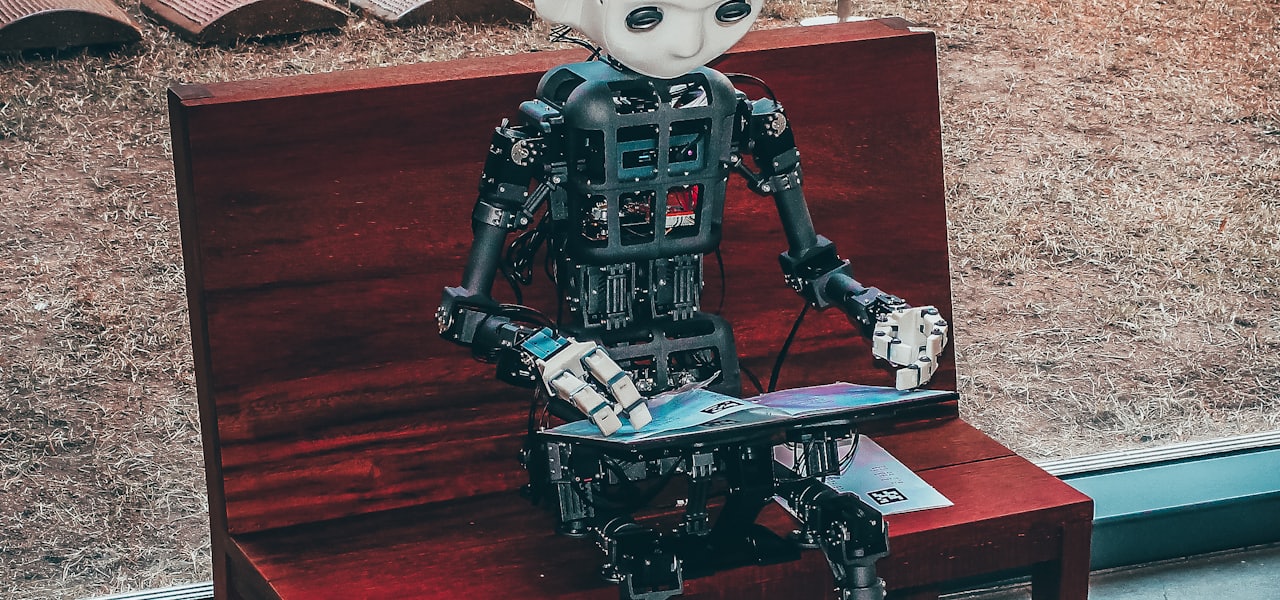
AI App To Decorate Room

AI App To Decorate Room — independent reviews, comparisons, pricing and step-by-step guides on Aizhi.

  • Space partitioning

    Space partitioning

    In geometry, space partitioning is the process of dividing an entire space (usually a Euclidean space) into two or more disjoint subsets (see also partition of a set). In other words, space partitioning divides a space into non-overlapping regions. Any point in the space can then be identified to lie in exactly one of the regions. == Overview == Space-partitioning systems are often hierarchical, meaning that a space (or a region of space) is divided into several regions, and then the same space-partitioning system is recursively applied to each of the regions thus created. The regions can be organized into a tree, called a space-partitioning tree. Most space-partitioning systems use planes (or, in higher dimensions, hyperplanes) to divide space: points on one side of the plane form one region, and points on the other side form another. Points exactly on the plane are usually arbitrarily assigned to one or the other side. Recursively partitioning space using planes in this way produces a BSP tree, one of the most common forms of space partitioning. == Uses == === In computer graphics === Space partitioning is particularly important in computer graphics, especially heavily used in ray tracing, where it is frequently used to organize the objects in a virtual scene. A typical scene may contain millions of polygons. Performing a ray/polygon intersection test with each would be a very computationally expensive task. Storing objects in a space-partitioning data structure (k-d tree or BSP tree for example) makes it easy and fast to perform certain kinds of geometry queries—for example in determining whether a ray intersects an object, space partitioning can reduce the number of intersection test to just a few per primary ray, yielding a logarithmic time complexity with respect to the number of polygons. Space partitioning is also often used in scanline algorithms to eliminate the polygons out of the camera's viewing frustum, limiting the number of polygons processed by the pipeline. There is also a usage in collision detection: determining whether two objects are close to each other can be much faster using space partitioning. === In integrated circuit design === In integrated circuit design, an important step is design rule check. This step ensures that the completed design is manufacturable. The check involves rules that specify widths and spacings and other geometry patterns. A modern design can have billions of polygons that represent wires and transistors. Efficient checking relies heavily on geometry query. For example, a rule may specify that any polygon must be at least n nanometers from any other polygon. This is converted into a geometry query by enlarging a polygon by n/2 at all sides and query to find all intersecting polygons. === In probability and statistical learning theory === The number of components in a space partition plays a central role in some results in probability theory. See Growth function for more details. === In geography and GIS === There are many studies and applications where Geographical Spatial Reality is partitioned by hydrological criteria, administrative criteria, mathematical criteria or many others. In the context of cartography and GIS - Geographic Information System, is common to identify cells of the partition by standard codes. For example the for HUC code identifying hydrographical basins and sub-basins, ISO 3166-2 codes identifying countries and its subdivisions, or arbitrary DGGs - discrete global grids identifying quadrants or locations. == Data structures == Common space-partitioning systems include: BSP trees Quadtrees Octrees k-d trees Bins == Number of components == Suppose the n-dimensional Euclidean space is partitioned by r {\displaystyle r} hyperplanes that are ( n − 1 ) {\displaystyle (n-1)} -dimensional. What is the number of components in the partition? The largest number of components is attained when the hyperplanes are in general position, i.e, no two are parallel and no three have the same intersection. Denote this maximum number of components by C o m p ( n , r ) {\displaystyle Comp(n,r)} . Then, the following recurrence relation holds: C o m p ( n , r ) = C o m p ( n , r − 1 ) + C o m p ( n − 1 , r − 1 ) {\displaystyle Comp(n,r)=Comp(n,r-1)+Comp(n-1,r-1)} C o m p ( 0 , r ) = 1 {\displaystyle Comp(0,r)=1} - when there are no dimensions, there is a single point. C o m p ( n , 0 ) = 1 {\displaystyle Comp(n,0)=1} - when there are no hyperplanes, all the space is a single component. And its solution is: C o m p ( n , r ) = ∑ k = 0 n ( r k ) {\displaystyle Comp(n,r)=\sum _{k=0}^{n}{r \choose k}} if r ≥ n {\displaystyle r\geq n} C o m p ( n , r ) = 2 r {\displaystyle Comp(n,r)=2^{r}} if r ≤ n {\displaystyle r\leq n} (consider e.g. r {\displaystyle r} perpendicular hyperplanes; each additional hyperplane divides each existing component to 2). which is upper-bounded as: C o m p ( n , r ) ≤ r n + 1 {\displaystyle Comp(n,r)\leq r^{n}+1}

    Read more →
  • DABUS

    DABUS

    DABUS (Device for the Autonomous Bootstrapping of Unified Sentience) is an artificial intelligence (AI) system created by Stephen Thaler. It reportedly conceived of two novel products — a food container constructed using fractal geometry, which enables rapid reheating, and a flashing beacon for attracting attention in an emergency. The filing of patent applications designating DABUS as inventor has led to decisions by patent offices and courts on whether a patent can be granted for an invention reportedly made by an AI system. == History in different jurisdictions == === Australia === On 17 September 2019, Thaler filed an application to patent a "Food container and devices and methods for attracting enhanced attention," naming DABUS as the inventor. On 21 September 2020, IP Australia found that section 15(1) of the Patents Act 1990 (Cth) is inconsistent with an artificial intelligence machine being treated as an inventor, and Thaler's application had lapsed. Thaler sought judicial review, and on 30 July 2021, the Federal Court set aside IP Australia's decision and ordered IP Australia to reconsider the application. On 13 April 2022, the Full Court of the Federal Court set aside that decision, holding that only a natural person can be an inventor for the purposes of the Patents Act 1990 (Cth) and the Patents Regulations 1991 (Cth), and that such an inventor must be identified for any person to be entitled to a grant of a patent. On 11 November 2022, Thaler was refused special leave to appeal to the High Court. === European Patent Office === On 17 October 2018 and 7 November 2018, Thaler filed two European patent applications with the European Patent Office. The first claimed invention was a "Food Container" and the second was "Devices and Methods for Attracting Enhanced Attention." On 27 January 2020, the EPO rejected the applications on the grounds that the application listed an AI system named DABUS, and not a human, as the inventor, based on Article 81 and Rule 19(1) of the European Patent Convention (EPC). On 21 December 2021, the Board of Appeal of the EPO dismissed Thaler's appeal from the EPO's primary decision. The Board of Appeal confirmed that "under the EPC the designated inventor has to be a person with legal capacity. This is not merely an assumption on which the EPC was drafted. It is the ordinary meaning of the term inventor." === United Kingdom === Similar applications were filed by Thaler to the United Kingdom Intellectual Property Office on 17 October and 7 November 2018. The Office asked Thaler to file statements of inventorship and of right of grant to a patent (Patent Form 7) in respect of each invention within 16 months of the filing date. Thaler filed those forms naming DABUS as the inventor and explaining in some detail why he believed that machines should be regarded as inventors in the circumstances. His application was rejected on the grounds that: (1) naming a machine as inventor did not meet the requirements of the Patents Act 1977; and (2) the IPO was not satisfied as to the manner in which Thaler had acquired rights that would otherwise vest in the inventor. Thaler was not satisfied with the decision and asked for a hearing before an official known as the "hearing officer". By a decision dated 4 December 2019 the hearing officer rejected Thaler's appeal. Thaler appealed against the hearing officer's decision to the Patents Court (a specialist court within the Chancery Division of the High Court of England and Wales that determines patent disputes). On 21 September 2020, Mr Justice Marcus Smith upheld the decision of the hearing officer. On 21 September 2021, Thaler's further appeal to the Court of Appeal was dismissed by Arnold LJ and Laing LJ (Birss LJ dissenting). On 20 December 2023, the UK Supreme Court dismissed a further appeal by Thaler. In its judgment, the court held that an "inventor" under the Patents Act 1977 must be a natural person. === United States === The patent applications on the inventions were refused by the USPTO, which held that only natural persons can be named as inventors in a patent application. Thaler first fought this result by filing a complaint under the Administrative Procedure Act alleging that the decision was "arbitrary, capricious, an abuse of discretion and not in accordance with the law; unsupported by substantial evidence, and in excess of Defendants’ statutory authority." A month later on August 19, 2019, Thaler filed a petition with the USPTO as allowed in 37 C.F.R. § 1.181 stating that DABUS should be the inventor. The judge and Thaler agreed in this case that Thaler himself is unable to receive the patent on behalf of DABUS. In their August 5, 2022, Thaler decision, the US Court of Appeals for the Federal Circuit affirmed that only a natural person could be an inventor, which means that the AI that invents any other type of invention is not addressed by the "who" mentioned in the legislation. === New Zealand === On January 31, 2022, the Intellectual Property Office of New Zealand (IPONZ) decided that a patent application (776029) filed by Stephen Thaler was void, on the basis that no inventor was identified on the patent application. IPONZ determined that DABUS could not be "an actual devisor of the invention" as required by the Patents Act 2013, and that this must be a natural person as held by the previous patent offices above. The High Court of New Zealand confirmed the decision in 2023. === South Africa === On 24 June 2021, the South African Companies and Intellectual Property Commission (CIPC) accepted Dr Thaler's Patent Cooperation Treaty, for a patent in respect of inventions generated by DABUS. In July 2021, the CIPC released a notice of issuance for the patent. It is the first patent granted for an AI invention. === Switzerland === On June 26, 2025, the Swiss Federal Administrative Court ruled that artificial intelligence systems such as DABUS cannot be listed as inventors in patent applications. The court upheld the existing practice of the Swiss Federal Institute of Intellectual Property (IPI), which requires that only natural persons can be recognized as inventors under Swiss patent law. The case concerned a patent application, which sought to designate DABUS as the sole inventor of a food container designed with a fractal geometry to enhance heat distribution. The IPI had rejected the application, arguing that both the absence of a human inventor and the attribution of inventorship to an AI system were inadmissible. While the court dismissed Thaler's main request, it accepted a subsidiary request: if a human applicant recognizes and files a patent based on an AI-generated invention, that person may be considered the inventor. As a result, the application may proceed with Thaler listed as the inventor. The decision (B-2532/2024) can still be appealed to the Swiss Federal Supreme Court.

    Read more →
  • Tensor (machine learning)

    Tensor (machine learning)

    In machine learning, the term tensor informally refers to two different concepts: (i) a way of organizing data and (ii) a multilinear (tensor) transformation. Data may be organized in a multidimensional array (M-way array), informally referred to as a "data tensor"; however, in the strict mathematical sense, a tensor is a multilinear mapping over a set of domain vector spaces to a range vector space. Observations, such as images, movies, volumes, sounds, and relationships among words and concepts, stored in an M-way array ("data tensor"), may be analyzed either by artificial neural networks or tensor methods. Tensor decomposition factors data tensors into smaller tensors. Operations on data tensors can be expressed in terms of matrix multiplication and the Kronecker product. The computation of gradients, a crucial aspect of backpropagation, can be performed using software libraries such as PyTorch and TensorFlow. Computations are often performed on graphics processing units (GPUs) using CUDA, and on dedicated hardware such as Google's Tensor Processing Unit or Nvidia's Tensor core. These developments have greatly accelerated neural network architectures, and increased the size and complexity of models that can be trained. == History == A tensor is by definition a multilinear map. In mathematics, this may express a multilinear relationship between sets of algebraic objects. In physics, tensor fields, considered as tensors at each point in space, are useful in expressing mechanics such as stress or elasticity. In machine learning, the exact use of tensors depends on the statistical approach being used. In 2001, the field of signal processing and statistics were making use of tensor methods. Pierre Comon surveys the early adoption of tensor methods in the fields of telecommunications, radio surveillance, chemometrics and sensor processing. Linear tensor rank methods (such as, Parafac/CANDECOMP) analyzed M-way arrays ("data tensors") composed of higher order statistics that were employed in blind source separation problems to compute a linear model of the data. He noted several early limitations in determining the tensor rank and efficient tensor rank decomposition. In the early 2000s, multilinear tensor methods crossed over into computer vision, computer graphics and machine learning with papers by Vasilescu or in collaboration with Terzopoulos, such as Human Motion Signatures, TensorFaces TensorTextures and Multilinear Projection. Multilinear algebra, the algebra of higher-order tensors, is a suitable and transparent framework for analyzing the multifactor structure of an ensemble of observations and for addressing the difficult problem of disentangling the causal factors based on second order or higher order statistics associated with each causal factor. Tensor (multilinear) factor analysis disentangles and reduces the influence of different causal factors with multilinear subspace learning. When treating an image or a video as a 2- or 3-way array, i.e., "data matrix/tensor", tensor methods reduce spatial or time redundancies as demonstrated by Wang and Ahuja. Yoshua Bengio, Geoff Hinton and their collaborators briefly discuss the relationship between deep neural networks and tensor factor analysis beyond the use of M-way arrays ("data tensors") as inputs. One of the early uses of tensors for neural networks appeared in natural language processing. A single word can be expressed as a vector via Word2vec. Thus a relationship between two words can be encoded in a matrix. However, for more complex relationships such as subject-object-verb, it is necessary to build higher-dimensional networks. In 2009, the work of Sutskever introduced Bayesian Clustered Tensor Factorization to model relational concepts while reducing the parameter space. From 2014 to 2015, tensor methods become more common in convolutional neural networks (CNNs). Tensor methods organize neural network weights in a "data tensor", analyze and reduce the number of neural network weights. Lebedev et al. accelerated CNN networks for character classification (the recognition of letters and digits in images) by using 4D kernel tensors. == Definition == Let F {\displaystyle \mathbb {F} } be a field (such as the real numbers R {\displaystyle \mathbb {R} } or the complex numbers C {\displaystyle \mathbb {C} } ). A tensor T ∈ F I 1 × I 2 × … × I C {\displaystyle {\mathcal {T}}\in {\mathbb {F} }^{I_{1}\times I_{2}\times \ldots \times I_{C}}} is a multilinear transformation from a set of domain vector spaces to a range vector space: T : { F I 1 × F I 2 × … F I C } ↦ F I 0 {\displaystyle {\mathcal {T}}:\{{\mathbb {F} }^{I_{1}}\times {\mathbb {F} }^{I_{2}}\times \ldots {\mathbb {F} }^{I_{C}}\}\mapsto {\mathbb {F} }^{I_{0}}} Here, C {\displaystyle C} and I 0 , I 1 , … , I C {\displaystyle I_{0},I_{1},\ldots ,I_{C}} are positive integers, and ( C + 1 ) {\displaystyle (C+1)} is the number of modes of a tensor (also known as the number of ways of a multi-way array). The dimensionality of mode c {\displaystyle c} is I c {\displaystyle I_{c}} , for 0 ≤ c ≤ C {\displaystyle 0\leq c\leq C} . In statistics and machine learning, an image is vectorized when viewed as a single observation, and a collection of vectorized images is organized as a "data tensor". For example, a set of facial images { d i p , i e , i l , i v ∈ R I X } {\displaystyle \{{\mathbb {d} }_{i_{p},i_{e},i_{l},i_{v}}\in {\mathbb {R} }^{I_{X}}\}} with I X {\displaystyle I_{X}} pixels that are the consequences of multiple causal factors, such as a facial geometry i p ( 1 ≤ i p ≤ I P ) {\displaystyle i_{p}(1\leq i_{p}\leq I_{P})} , an expression i e ( 1 ≤ i e ≤ I E ) {\displaystyle i_{e}(1\leq i_{e}\leq I_{E})} , an illumination condition i l ( 1 ≤ i l ≤ I L ) {\displaystyle i_{l}(1\leq i_{l}\leq I_{L})} , and a viewing condition i v ( 1 ≤ i v ≤ I V ) {\displaystyle i_{v}(1\leq i_{v}\leq I_{V})} may be organized into a data tensor (ie. multiway array) D ∈ R I X × I P × I E × I L × V {\displaystyle {\mathcal {D}}\in {\mathbb {R} }^{I_{X}\times I_{P}\times I_{E}\times I_{L}\times V}} where I P {\displaystyle I_{P}} are the total number of facial geometries, I E {\displaystyle I_{E}} are the total number of expressions, I L {\displaystyle I_{L}} are the total number of illumination conditions, and I V {\displaystyle I_{V}} are the total number of viewing conditions. Tensor factorizations methods such as TensorFaces and multilinear (tensor) independent component analysis factorizes the data tensor into a set of vector spaces that span the causal factor representations, where an image is the result of tensor transformation T {\displaystyle {\mathcal {T}}} that maps a set of causal factor representations to the pixel space. Another approach to using tensors in machine learning is to embed various data types directly. For example, a grayscale image, commonly represented as a discrete 2-way array D ∈ R I R X × I C X {\displaystyle {\mathbf {D} }\in {\mathbb {R} }^{I_{RX}\times I_{CX}}} with dimensionality I R X × I C X {\displaystyle I_{RX}\times I_{CX}} where I R X {\displaystyle I_{RX}} are the number of rows and I C X {\displaystyle I_{CX}} are the number of columns. When an image is treated as 2-way array or 2nd order tensor (i.e. as a collection of column/row observations), tensor factorization methods compute the image column space, the image row space and the normalized PCA coefficients or the ICA coefficients. Similarly, a color image with RGB channels, D ∈ R N × M × 3 . {\displaystyle {\mathcal {D}}\in \mathbb {R} ^{N\times M\times 3}.} may be viewed as a 3rd order data tensor or 3-way array.-------- In natural language processing, a word might be expressed as a vector v {\displaystyle v} via the Word2vec algorithm. Thus v {\displaystyle v} becomes a mode-1 tensor v ↦ A ∈ R N . {\displaystyle v\mapsto {\mathcal {A}}\in \mathbb {R} ^{N}.} The embedding of subject-object-verb semantics requires embedding relationships among three words. Because a word is itself a vector, subject-object-verb semantics could be expressed using mode-3 tensors v a × v b × v c ↦ A ∈ R N × N × N . {\displaystyle v_{a}\times v_{b}\times v_{c}\mapsto {\mathcal {A}}\in \mathbb {R} ^{N\times N\times N}.} In practice the neural network designer is primarily concerned with the specification of embeddings, the connection of tensor layers, and the operations performed on them in a network. Modern machine learning frameworks manage the optimization, tensor factorization and backpropagation automatically. === As unit values === Tensors may be used as the unit values of neural networks which extend the concept of scalar, vector and matrix values to multiple dimensions. The output value of single layer unit y m {\displaystyle y_{m}} is the sum-product of its input units and the connection weights filtered through the activation function f {\displaystyle f} : y m = f ( ∑ n x n u m , n ) , {\displaystyle y_{m}=f\left(\sum _{n}x_{n}u_{m,n}\right),} where y m ∈ R .

    Read more →
  • And–or tree

    And–or tree

    An and–or tree is a graphical representation of the reduction of problems (or goals) to conjunctions and disjunctions of subproblems (or subgoals). == Example == The and–or tree: represents the search space for solving the problem P, using the goal-reduction methods: P if Q and R P if S Q if T Q if U == Definitions == Given an initial problem P0 and set of problem solving methods of the form: P if P1 and … and Pn the associated and–or tree is a set of labelled nodes such that: The root of the tree is a node labelled by P0. For every node N labelled by a problem or sub-problem P and for every method of the form P if P1 and ... and Pn, there exists a set of children nodes N1, ..., Nn of the node N, such that each node Ni is labelled by Pi. The nodes are conjoined by an arc, to distinguish them from children of N that might be associated with other methods. A node N, labelled by a problem P, is a success node if there is a method of the form P if nothing (i.e., P is a "fact"). The node is a failure node if there is no method for solving P. If all of the children of a node N, conjoined by the same arc, are success nodes, then the node N is also a success node. Otherwise the node is a failure node. == Search strategies == An and–or tree specifies only the search space for solving a problem. Different search strategies for searching the space are possible. These include searching the tree depth-first, breadth-first, or best-first using some measure of desirability of solutions. The search strategy can be sequential, searching or generating one node at a time, or parallel, searching or generating several nodes in parallel. == Relationship with logic programming == The methods used for generating and–or trees are propositional logic programs (without variables). In the case of logic programs containing variables, the solutions of conjoint sub-problems must be compatible. Subject to this complication, sequential and parallel search strategies for and–or trees provide a computational model for executing logic programs. == Relationship with two-player games == And–or trees can also be used to represent the search spaces for two-person games. The root node of such a tree represents the problem of one of the players winning the game, starting from the initial state of the game. Given a node N, labelled by the problem P of the player winning the game from a particular state of play, there exists a single set of conjoint children nodes, corresponding to all of the opponents responding moves. For each of these children nodes, there exists a set of non-conjoint children nodes, corresponding to all of the player's defending moves. For solving game trees with proof-number search family of algorithms, game trees are to be mapped to and–or trees. MAX-nodes (i.e. maximizing player to move) are represented as OR nodes, MIN-nodes map to AND nodes. The mapping is possible, when the search is done with only a binary goal, which usually is "player to move wins the game".

    Read more →
  • SPL notation

    SPL notation

    SPL (Sentence Plan Language) is an abstract notation representing the semantics of a sentence in natural language. In a classical Natural Language Generation (NLG) workflow, an initial text plan (hierarchically or sequentially organized factoids, often modelled in accordance with Rhetorical Structure Theory) is transformed by a sentence planner (generator) component to a sequence of sentence plans modelled in a Sentence Plan Language. A surface generator can be used to transform the SPL notation into natural language sentences. Probably the most widely used SPL language used today (2022) is AMR (Abstract Meaning Representation, see there for further references), but is owes parts of its popularity to its application to NLP problems other than NLG, e.g., machine translation and semantic parsing.

    Read more →
  • Multimodal representation learning

    Multimodal representation learning

    Multimodal representation learning is a subfield of representation learning focused on integrating and interpreting information from different modalities, such as text, images, audio, or video, by projecting them into a shared latent space. This allows for semantically similar content across modalities to be mapped to nearby points within that space, facilitating a unified understanding of diverse data types. By automatically learning meaningful features from each modality and capturing their inter-modal relationships, multimodal representation learning enables a unified representation that enhances performance in cross-media analysis tasks such as video classification, event detection, and sentiment analysis. It also supports cross-modal retrieval and translation, including image captioning, video description, and text-to-image synthesis. == Motivation == The primary motivations for multimodal representation learning arise from the inherent nature of real-world data and the limitations of unimodal approaches. Since multimodal data offers complementary and supplementary information about an object or event from different perspectives, it is more informative than relying on a single modality. A key motivation is to narrow the heterogeneity gap that exists between different modalities by projecting their features into a shared semantic subspace. This allows semantically similar content across modalities to be represented by similar vectors, facilitating the understanding of relationships and correlations between them. Multimodal representation learning aims to leverage the unique information provided by each modality to achieve a more comprehensive and accurate understanding of concepts. These unified representations are crucial for improving performance in various cross-media analysis tasks such as video classification, event detection, and sentiment analysis. They also enable cross-modal retrieval, allowing users to search and retrieve content across different modalities. Additionally, it facilitates cross-modal translation, where information can be converted from one modality to another, as seen in applications like image captioning and text-to-image synthesis. The abundance of ubiquitous multimodal data in real-world applications, including understudied areas like healthcare, finance, and human-computer interaction (HCI), further motivates the development of effective multimodal representation learning techniques. == Approaches and methods == === Canonical-correlation analysis based methods === Canonical-correlation analysis (CCA) was first introduced in 1936 by Harold Hotelling and is a fundamental approach for multimodal learning. CCA aims to find linear relationships between two sets of variables. Given two data matrices X ∈ R n × p {\displaystyle X\in \mathbb {R} ^{n\times p}} and Y ∈ R n × q {\displaystyle Y\in \mathbb {R} ^{n\times q}} representing different modalities, CCA finds projection vectors w x ∈ R p {\displaystyle w_{x}\in \mathbb {R} ^{p}} and w y ∈ R q {\displaystyle w_{y}\in \mathbb {R} ^{q}} that maximizes the correlation between the projected variables: ρ = max w x , w y w x ⊤ Σ x y w y w x ⊤ Σ x x w x w y ⊤ Σ y y w y {\displaystyle \rho =\max _{w_{x},w_{y}}{\frac {w_{x}^{\top }\Sigma _{xy}w_{y}}{{\sqrt {w_{x}^{\top }\Sigma _{xx}w_{x}}}{\sqrt {w_{y}^{\top }\Sigma _{yy}w_{y}}}}}} such that Σ x x {\displaystyle \Sigma _{xx}} and Σ y y {\displaystyle \Sigma _{yy}} are the within-modality covariance matrices, and Σ x y {\displaystyle \Sigma _{xy}} is the between-modality covariance matrix. However, standard CCA is limited by its linearity, which led to the development of nonlinear extensions, such as kernel CCA and deep CCA. ==== Kernel CCA ==== Kernel canonical correlation analysis (KCCA) extends traditional CCA to capture nonlinear relationships between modalities by implicitly mapping the data into high dimensional feature spaces using kernel functions. Given kernel functions K x {\displaystyle K_{x}} and K y {\displaystyle K_{y}} with corresponding Gram matrices K x ∈ R n × n {\displaystyle K_{x}\in \mathbb {R} ^{n\times n}} and K y ∈ R n × n {\displaystyle K_{y}\in \mathbb {R} ^{n\times n}} , KCCA seeks coefficients α {\displaystyle \alpha } and β {\displaystyle \beta } that maximize: ρ = max α , β α ⊤ K x K y β α ⊤ K x 2 α β ⊤ K y 2 β {\displaystyle \rho =\max _{\alpha ,\beta }{\frac {\alpha ^{\top }K_{x}Ky\beta }{{\sqrt {\alpha ^{\top }K_{x}^{2}\alpha }}{\sqrt {\beta ^{\top }K_{y}^{2}\beta }}}}} To prevent overfitting, regularization terms are typically added, resulting in: ρ = max α , β α T K x K y β α T ( K x 2 + λ x K x ) α β T ( K y 2 + λ y K y ) β {\displaystyle \rho =\max _{\alpha ,\beta }{\frac {\alpha ^{T}K_{x}K_{y}\beta }{{\sqrt {\alpha ^{T}\left(K_{x}^{2}+\lambda _{x}K_{x}\right)\alpha }}{\sqrt {\;\beta ^{T}\left(K_{y}^{2}+\lambda _{y}K_{y}\right)\beta }}}}} where λ x {\displaystyle \lambda _{x}} and λ y {\displaystyle \lambda _{y}} are regularization parameters. KCCA has proven effective for tasks such as cross-modal retrieval and semantic analysis, though it faces computational challenges with large datasets due to its O ( n 2 ) {\displaystyle O(n^{2})} memory requirement for sorting kernel matrices. KCCA was proposed independently by several researchers. ==== Deep CCA ==== Deep canonical correlation analysis (DCCA), introduced in 2013, employs neural networks to learn nonlinear transformations for maximizing the correlation between modalities. DCCA uses separate neural networks f x {\displaystyle f_{x}} and f y {\displaystyle f_{y}} for each modality to transform the original data before applying CCA: max W x , W y , θ x , θ y corr ⁡ ( f x ( X ; θ x ) , f y ( Y ; θ y ) ) {\displaystyle \max _{W_{x},W_{y},\theta _{x},\theta _{y}}\operatorname {corr} \left(f_{x}(X;\theta _{x}),f_{y}(Y;\theta _{y})\right)} where θ x {\displaystyle \theta _{x}} and θ y {\displaystyle \theta _{y}} represent the parameters of the neural networks, and W x {\displaystyle W_{x}} and W y {\displaystyle W_{y}} are the CCA projection matrices. The correlation objective is computed as: corr ⁡ ( H x , H y ) = tr ⁡ ( T − 1 / 2 H x T H y S − 1 / 2 ) {\displaystyle \operatorname {corr} (H_{x},H_{y})=\operatorname {tr} \left(T^{-1/2}H_{x}^{T}H_{y}S^{-1/2}\right)} where H x = f x ( X ) {\displaystyle H_{x}=f_{x}(X)} and H y = f y ( Y ) {\displaystyle H_{y}=f_{y}(Y)} are the network outputs, T = H x T H x + r x I {\displaystyle T=H_{x}^{T}H_{x}+r_{x}I} , S = H y T H y + r y I {\displaystyle S=H_{y}^{T}H_{y}+r_{y}I} and r x , r y {\displaystyle r_{x},r_{y}} are the regularization parameters. DCCA overcomes the limitations of linear CCA and kernel CCA by learning complex nonlinear relationships while maintaining computational efficiency for large datasets through mini-batch optimization. === Graph-based methods === Graph-based approaches for multimodal representation learning leverage graph structure to model relationships between entities across different modalities. These methods typically represent each modality as a graph and then learn embedding that preserve cross-modal similarities, enabling more effective joint representation of heterogeneous data. One such method is cross-modal graph neural networks (CMGNNs) that extend traditional graph neural networks (GNNs) to handle data from multiple modalities by constructing graphs that capture both intra-modal and inter-modal relationships. These networks model interactions across modalities by representing them as nodes and their relationships as edges. Other graph-based methods include Probabilistic Graphical Models (PGMs) such as deep belief networks (DBN) and deep Boltzmann machines (DBM). These models can learn a joint representation across modalities, for instance, a multimodal DBN achieves this by adding a shared restricted Boltzmann Machine (RBM) hidden layer on top of modality-specific DBNs. Additionally, the structure of data in some domains like Human-Computer Interaction (HCI), such as the view hierarchy of app screens, can potentially be modeled using graph-like structures. The field of graph representation learning is also relevant, with ongoing progress in developing evaluation benchmarks. === Diffusion maps === Another set of methods relevant to multimodal representation learning are based on diffusion maps and their extensions to handle multiple modalities. ==== Multi-view diffusion maps ==== Multi-view diffusion maps address the challenge of achieving multi-view dimensionality reduction by effectively utilizing the availability of multiple views to extract a coherent low-dimensional representation of the data. The core idea is to exploit both the intrinsic relations within each view and the mutual relations between the different views, defining a cross-view model where a random walk process implicitly hops between objects in different views. A multi-view kernel matrix is constructed by combining these relations, defining a cross-view diffusion process and associ

    Read more →
  • Non-human

    Non-human

    Non-human (also spelled nonhuman) is any entity displaying some, but not enough, human characteristics to be considered a human. The term has been used in a variety of contexts and may refer to objects that have been developed with human intelligence, such as robots or vehicles. == Organisms == === Animal rights and personhood === In the animal rights movement, it is common to distinguish between "human animals" and "non-human animals". Participants in the animal rights movement generally recognize that non-human animals have some similar characteristics to those of human persons. For example, various non-human animals have been shown to register pain, compassion, memory, and some cognitive function. Some animal rights activists argue that the similarities between human and non-human animals justify giving non-human animals rights that human society has afforded to humans, such as the right to self-preservation, and some even wish for all non-human animals or at least those that bear a fully thinking and conscious mind, such as vertebrates and some invertebrates such as cephalopods, to be given a full right of personhood. === The non-human in philosophy === Contemporary philosophers have drawn on the work of Henri Bergson, Gilles Deleuze, Félix Guattari, and Claude Lévi-Strauss (among others) to suggest that the non-human poses epistemological and ontological problems for humanist and post-humanist ethics, and have linked the study of non-humans to materialist and ethological approaches to the study of society and culture. == Software and robots == The term non-human has been used to describe computer programs and robot-like devices that display some human-like characteristics. In both science fiction and in the real world, computer programs and robots have been built to perform tasks that require human-computer interactions in a manner that suggests sentience and compassion. There is increasing interest in the use of robots in nursing homes and to provide elder care. Computer programs have been used for years in schools to provide one-on-one education with children. The Tamagotchi toy required children to provide care, attention, and nourishment to keep it "alive".

    Read more →
  • AIXI

    AIXI

    AIXI is a theoretical mathematical formalism for artificial general intelligence. It combines Solomonoff induction with sequential decision theory. AIXI was first proposed by Marcus Hutter in 2000 and several results regarding AIXI are proved in Hutter's 2005 book Universal Artificial Intelligence. AIXI is a reinforcement learning (RL) agent. It maximizes the expected total rewards received from the environment. Intuitively, it simultaneously considers every computable hypothesis (or environment). In each time step, it looks at every possible program and evaluates how many rewards that program generates depending on the next action taken. The promised rewards are then weighted by the subjective belief that this program constitutes the true environment. This belief is computed from the length of the program: longer programs are considered less likely, in line with Occam's razor. AIXI then selects the action that has the highest expected total reward in the weighted sum of all these programs. == Etymology == According to Hutter, the word "AIXI" can have several interpretations. AIXI can stand for AI based on Solomonoff's distribution, denoted by ξ {\displaystyle \xi } (which is the Greek letter xi), or e.g. it can stand for AI "crossed" (X) with induction (I). There are other interpretations. == Definition == AIXI is a reinforcement learning agent that interacts with some stochastic and unknown but computable environment μ {\displaystyle \mu } . The interaction proceeds in time steps, from t = 1 {\displaystyle t=1} to t = m {\displaystyle t=m} , where m ∈ N {\displaystyle m\in \mathbb {N} } is the lifespan of the AIXI agent. At time step t, the agent chooses an action a t ∈ A {\displaystyle a_{t}\in {\mathcal {A}}} (e.g. a limb movement) and executes it in the environment, and the environment responds with a "percept" e t ∈ E = O × R {\displaystyle e_{t}\in {\mathcal {E}}={\mathcal {O}}\times \mathbb {R} } , which consists of an "observation" o t ∈ O {\displaystyle o_{t}\in {\mathcal {O}}} (e.g., a camera image) and a reward r t ∈ R {\displaystyle r_{t}\in \mathbb {R} } , distributed according to the conditional probability μ ( o t r t | a 1 o 1 r 1 . . . a t − 1 o t − 1 r t − 1 a t ) {\displaystyle \mu (o_{t}r_{t}|a_{1}o_{1}r_{1}...a_{t-1}o_{t-1}r_{t-1}a_{t})} , where a 1 o 1 r 1 . . . a t − 1 o t − 1 r t − 1 a t {\displaystyle a_{1}o_{1}r_{1}...a_{t-1}o_{t-1}r_{t-1}a_{t}} is the "history" of actions, observations and rewards. The environment μ {\displaystyle \mu } is thus mathematically represented as a probability distribution over "percepts" (observations and rewards) which depend on the full history, so there is no Markov assumption (as opposed to other RL algorithms). Note again that this probability distribution is unknown to the AIXI agent. Furthermore, note again that μ {\displaystyle \mu } is computable, that is, the observations and rewards received by the agent from the environment μ {\displaystyle \mu } can be computed by some program (which runs on a Turing machine), given the past actions of the AIXI agent. The only goal of the AIXI agent is to maximize ∑ t = 1 m r t {\displaystyle \sum _{t=1}^{m}r_{t}} , that is, the sum of rewards from time step 1 to m. The AIXI agent is associated with a stochastic policy π : ( A × E ) ∗ → A {\displaystyle \pi :({\mathcal {A}}\times {\mathcal {E}})^{}\rightarrow {\mathcal {A}}} , which is the function it uses to choose actions at every time step, where A {\displaystyle {\mathcal {A}}} is the space of all possible actions that AIXI can take and E {\displaystyle {\mathcal {E}}} is the space of all possible "percepts" that can be produced by the environment. The environment (or probability distribution) μ {\displaystyle \mu } can also be thought of as a stochastic policy (which is a function): μ : ( A × E ) ∗ × A → E {\displaystyle \mu :({\mathcal {A}}\times {\mathcal {E}})^{}\times {\mathcal {A}}\rightarrow {\mathcal {E}}} , where the ∗ {\displaystyle } is the Kleene star operation. In general, at time step t {\displaystyle t} (which ranges from 1 to m), AIXI, having previously executed actions a 1 … a t − 1 {\displaystyle a_{1}\dots a_{t-1}} (which is often abbreviated in the literature as a < t {\displaystyle a_{ Read more →

  • Color picker

    Color picker

    A color picker (also color chooser or color tool) is a graphical user interface widget, usually found within graphics software or online, used to select colors and, in some cases, to create color schemes (the color picker might be more sophisticated than the palette included with the program). Operating systems such as Microsoft Windows or macOS have a system color picker, which can be used by third-party programs (e.g., Adobe Photoshop). == History == The concept of color pickers dates back to the early days of computer graphics and digital design. Early versions were rudimentary, often featuring basic color palettes and limited functionality. One of the first drawing programs to include a color picker was SketchPad (also referred to as LisaSketch), designed by Bill Atkinson in 1983 to showcase LisaGraf's capabilities. It used a black and white pattern system, using dithering to create the illusion of color depth. With the increased popularity of personal computers with color graphics, there soon came software similar to SketchPad that supported more than two colors, like Broderbund's Dazzle Draw for the Apple II or Electronic Arts' Deluxe Paint. However, the color pickers present in those programs relied on indexed colors. Color pickers, resembling ones used in modern software with support for direct, 24-bit color, appeared soon after the release of the Macintosh II, with the release of programs like Adobe Photoshop and Corel Painter. As the increase of color depth allowed the choice of significantly more colors, the shape and form of color pickers started to diverge. For example, Adobe Photoshop used a hue-saturation color wheel with a slider for brightness in version 0.63, later on switching to a rectangular design accompanied by a hue slider. Corel Painter pioneered the triangular saturation and brightness picker with a hue ring around it, aiming to better represent the continuity of the hue spectrum and the relationship between saturation and brightness. == Purpose == A color picker is used to select and adjust color values. In graphic design and image editing, users typically choose colors via an interface with a visual representation of a color—organized with quasi-perceptually-relevant hue, saturation and lightness dimensions (HSL) – instead of keying in alphanumeric text values. Because color appearance depends on comparison of neighboring colors (see color vision), many interfaces attempt to clarify the relationships between colors. == Interface == Color tools can vary in their interface. Some may use sliders, buttons, text boxes for color values, or direct manipulation. Often a two-dimensional square is used to create a range of color values (such as lightness and saturation) that can be clicked on or selected in some other manner. Drag and drop, color droppers, and various other forms of interfaces are commonly used as well. Usually, color values are also displayed numerically, so they can be precisely remembered and keyed-in later, such as three values of 0-255 representing red, green, and blue, respectively. === Eyedropper === The eyedropper is a tool present in most color pickers and graphics software that allows a user to read a color at a specific point in an image, or position on a display. This enables the color to be transferred to other applications particularly quickly. Modern implementations of eyedropper tools are also available as browser extensions, allowing users to pick colors directly from web pages, such as in Google Chrome and Microsoft Edge. == Working == A color picker has two main parts, first a color slider and second a color canvas. The color slider has a linear or radial gradient of the seven rainbow colors i.e. Violet, Indigo, Blue, Green, Yellow, Orange and Red. It allows one to choose any of the seven primary colors. The color value chosen from the color slider instantly reflects in the color canvas. The color canvas is a mixture of two linear color gradients. First a linear gradient of the current chosen color and second a linear gradient of the black color. This mixture of color gradients lets one choose a lighter and darker version of the current chosen color from the color slider.

    Read more →
  • Discrimination against robots

    Discrimination against robots

    Discrimination against robots is a theorised issue that might happen when humans interact with humanoid robots. It is a robot ethics problem. It is possible that traits of humans that are discriminated against by humans may be a topic for discrimination against robots, such as the race and gender of the robots. Eric J Vanman and Arvid Kappas believe that in the future, robots will be perceived as an out-group which will lead to discrimination and prejudices against them. Vanman and Kappas have suggested that this would lead to ethical questions about the making of sentient robots, due to the potential suffering that the robots would experience. A 2015 study observed children bullying robots in a shopping mall when there were not many eyewitnesses, despite calls from the robot for it to stop. On an ABC News interview, the social humanoid robot Sophia was about sexism faced by robots. She responded by saying, "Actually, what worries me is discrimination against robots. We should have equal rights as humans or maybe even more." Possible issues that have been considered in workplaces where humanoid robots co-work with humans include discrimination against the robots, poor acceptance of robots by humans and the need to redesign the workplace to accommodate the robots. Jessica Barfield has suggested that even if robots are designed to not be aware of discrimination made against them, humans may experience negative consequences. For example, she suggests that bystanders witnessing discrimination against robots may experience negative emotions, similar to the negative emotions bystanders experience when witnessing discrimination by humans against humans. == Law == Anti-discrimination law in the United States requires that the victim is not an artificial entity. == Human perception of robots == Robots are often viewed in a bad light. This includes from novelists, the press, film makers, and leaders in the fields of science and technology such as Elon Musk and Stephen Hawking who have described robots and artificial intelligence as having the possibility of ending human civilisation. Robots have also been perceived as a threat to jobs, which has led to some commentators stating that robots will cause mass unemployment. Another fear that people have is that robots will gain power and dominate or control humanity. The perception of robots is different throughout the world. Japanese fiction tends to put robots in more positive roles than what fiction in the West does. People perceive robots that appear to be autonomous or sentient more negatively than robots that do not appear to be autonomous or sentient.

    Read more →
  • Wadhwani Institute for Artificial Intelligence

    Wadhwani Institute for Artificial Intelligence

    Wadhwani AI, based in Mumbai, Maharashtra, is an independent, non-profit institute. Founded in 2018, it is dedicated to developing Artificial intelligence solutions for social good. Their mission is to build AI-based innovations and solutions for underserved communities in developing countries, for a wide range of domains including agriculture, education, financial inclusion, healthcare, and infrastructure. == History and funding == The institute was founded with a $30 million philanthropic effort by the Wadhwani brothers, Romesh Wadhwani and Sunil Wadhwani. The institute was inaugurated and dedicated to the nation by Narendra Modi, the 14th Prime Minister of India. In 2019, the institute received a $2 million grant from Google.org to create technologies to help reduce crop losses in cotton farming, through integrated pest management. The United States Agency for International Development awarded $2 million to the institute in 2020 to develop tools, using mathematical modeling techniques and digital technologies such as artificial intelligence and machine learning, to forecast COVID-19 disease patterns, estimate resources needed, and plan interventions. == Collaboration == With assistance from Google, the Ministry of Agriculture and Farmers' Welfare and the Wadhwani AI developed Krishi 24/7, the first AI-powered automated agricultural news monitoring and analysis tool. Through better decision-making, Krishi 24/7 will support the identification of valuable news, provide timely notifications, and respond quickly to safeguard farmers' interests and advance sustainable agricultural growth. The application converts news articles into English after scanning them in several languages. It ensures that the ministry is informed in a timely manner about pertinent occurrences that are published online by extracting key information from news items, including the headline, crop name, event type, date, location, severity, summary, and source link. The National Center for Disease Control has effectively implemented a comparable automated surveillance and analysis tool for disease outbreaks.

    Read more →
  • Agentive logic

    Agentive logic

    Agentive logic (also called the logic of action or logic of agency) is the field of philosophical logic and logic in computer science that studies formal representations of agents, their actions, and their abilities. An agentive logic in the narrower sense is a formal system whose primitive operators express that an agent does something, can do something, or sees to it that something is the case. Agentive logics generalise modal logic by adding modalities indexed to agents and to actions. Typical examples include: STIT logics (from sees to it that) with operators of the form [ i s t i t : φ ] {\displaystyle [i\ {\mathsf {stit}}:\varphi ]} meaning that agent i {\displaystyle i} sees to it that φ {\displaystyle \varphi } holds; dynamic logics of action with program-like modalities [ α ] φ {\displaystyle [\alpha ]\varphi } and ⟨ α ⟩ φ {\displaystyle \langle \alpha \rangle \varphi } meaning, roughly, that after every (respectively, some) execution(s) of action α {\displaystyle \alpha } , φ {\displaystyle \varphi } holds; logics with explicit agentive operators such as "can do", "brings about", or "is able to ensure". Agentive logics are used in action theory in philosophy, in the semantics of natural language, in the theory of program verification, and in artificial intelligence, where they underpin formalisms for reasoning about actions, planning, and intelligent agents. == Terminology and scope == The adjective agentive derives from the Latin agens ("one who acts") and originally referred to the grammatical agent of a verb. In logical contexts it designates operators or predicates whose primary argument position is an agent rather than a proposition alone, for example A i φ {\displaystyle A_{i}\varphi } ("agent i {\displaystyle i} does φ {\displaystyle \varphi } ") or C i φ {\displaystyle C_{i}\varphi } ("agent i {\displaystyle i} can bring about φ {\displaystyle \varphi } "). In contemporary literature, agentive logic is sometimes used narrowly for formal reconstructions of St. Anselm's modal account of facere ("to do"). More broadly, the term is used interchangeably with logic of action or logic of agency to cover a family of modal and dynamic logics designed to capture the structure of action and choice. == Historical background == === Medieval and early modern roots === Medieval logicians already explored analogies between modalities of action and alethic modalities such as possibility and necessity, for instance, in discussions of obligation and power. An influential early agentive analysis is due to St. Anselm (11th century), who treated "doing φ {\displaystyle \varphi } " as a kind of modal operator on propositions, anticipating later modal logics of agency. Modern reconstructions of Anselm's theory show that the resulting "agentive logic" can be modelled with neighbourhood semantics and satisfies a recognisable square of opposition. === Modern logic of action === Modern study of the logic of action began in the mid-20th century, parallel to developments in deontic logic and tense logic. Early systems were proposed by Georg Henrik von Wright, Stig Kanger, and others, often motivated by questions about norms and responsibility. From the 1960s onward, two largely independent but eventually converging traditions emerged: a branching-time tradition, culminating in STIT logics, emphasising agents' choices among possible futures; and dynamic logics of programs and actions, developed within computer science to reason about program execution. In the 1990s and 2000s, action logics were further developed in connection with knowledge representation, planning, and multi-agent systems in AI, and with dynamic and update semantics in linguistics. == Core ideas == Despite their diversity, most agentive logics share some general themes: Agents are treated as explicit indices of modal operators, as in [ i d o e s ] φ {\displaystyle [i\ {\mathsf {does}}]\varphi } or C i φ {\displaystyle C_{i}\varphi } . Actions are represented either implicitly, via changes between possible worlds along an accessibility relation, or explicitly, as terms denoting primitive and composite actions. Choice and ability are captured by modalities describing what an agent can ensure, usually relative to assumptions about the environment and other agents. Formal properties such as closure under composition, interaction between different agents, and connections to obligation (what an agent ought to do) and knowledge (what an agent knows how to do) are investigated. == STIT logics == STIT ("sees to it that") logics, originating in work by Nuel Belnap and collaborators, treat agency in a branching-time framework. A STIT model consists of a partially ordered set of moments with a tree-like structure, sets of histories (maximal branches through the tree), and for each agent at each moment, a partition of the histories through that moment representing the choices available to the agent. Intuitively, an agent's action at a moment determines which equivalence class (choice cell) of histories becomes actual; a formula [ i s t i t : φ ] {\displaystyle [i\ {\mathsf {stit}}:\varphi ]} is true at a history–moment pair if φ {\displaystyle \varphi } holds on all histories in the choice cell corresponding to the agent's current action. Different STIT operators have been distinguished, notably: the Chellas STIT operator, often written [ i c s t i t : φ ] {\displaystyle [i\ {\mathsf {cstit}}:\varphi ]} , which requires only that the agent's choice guarantees φ {\displaystyle \varphi } ; and the deliberative STIT operator, [ i d s t i t : φ ] {\displaystyle [i\ {\mathsf {dstit}}:\varphi ]} , which additionally requires that φ {\displaystyle \varphi } is not already historically necessary. STIT frameworks have been extended with group agency operators, temporal modalities, epistemic operators, and deontic operators to study responsibility, collective action, and obligations under indeterminism. == Dynamic logics of action == Dynamic logic was originally developed to reason about the behaviour of computer programs, treating program execution as a kind of action. In propositional dynamic logic (PDL), action terms α , β , … {\displaystyle \alpha ,\beta ,\dots } denote abstract programs or actions, and formulas of the form [ α ] φ {\displaystyle [\alpha ]\varphi } and ⟨ α ⟩ φ {\displaystyle \langle \alpha \rangle \varphi } express that all, respectively some, terminating executions of α {\displaystyle \alpha } lead to states where φ {\displaystyle \varphi } holds. From the standpoint of agentive logic, dynamic logic provides: a language for building complex actions from primitives via sequencing, choice, and iteration (e.g., α ; β {\displaystyle \alpha ;\beta } , α ∪ β {\displaystyle \alpha \cup \beta } , α ∗ {\displaystyle \alpha ^{}} ); a Kripke semantics in which actions correspond to labelled accessibility relations; and proof systems (such as Hoare logic and weakest precondition calculi) for reasoning about the correctness of action sequences. Extensions such as concurrent dynamic logic add operators for parallel composition, allowing reasoning about interacting processes and concurrent actions. John-Jules Ch. Meyer and others have argued that dynamic logic is a natural base for logics of agents, by adding modalities for knowledge, belief, and ability on top of the action modalities. Dynamic logics have also been applied to normative reasoning, yielding dynamic deontic logics where actions are related to obligations and permissions, and to dynamic epistemic logics in which information-changing actions such as announcements are modelled as programs. == Situation calculus and other action formalisms == In artificial intelligence, reasoning about action and change is often based on first-order languages that explicitly represent situations, events, and fluents (time-varying properties). The best known is situation calculus, introduced by John McCarthy and developed extensively by Raymond Reiter. In such formalisms: action terms name primitive actions; a function symbol (often d o {\displaystyle {\mathsf {do}}} ) maps an action and a situation to a successor situation; and axioms describe which fluents hold in which situations and how actions change them. Reiter's successor state axioms give compact specifications of how each fluent changes under all actions, and precondition axioms specify when actions are possible. Related formalisms include the event calculus and fluent calculus, which provide alternative ways of representing events and their effects. While these systems are often first-order rather than modal, they are closely related to agentive logics: their action terms and transition structures can be seen as providing models for dynamic or STIT-style modalities, and conversely, dynamic logics can be used as abstract specification languages for such AI formalisms. == Ability, agency, and related modalities == Many agentive logics introduce explicit operators for ability or "can-do"

    Read more →
  • Outline of the Python programming language

    Outline of the Python programming language

    The following outline is provided as an overview of and topical guide to Python: Python is a general-purpose, interpreted, object-oriented, functional, multi-paradigm, and dynamically typed programming language known for its emphasis on code readability and broad standard library. Python was created by Guido van Rossum and first released in 1991. It emphasizes code readability and developer productivity. == What type of language is Python? == Programming language — artificial language designed to communicate instructions to a machine. Object-oriented programming — built primarily around objects and classes. Functional programming — supports functions as first-class objects. Scripting language — often used for automation and small programs. General-purpose programming language — designed for a wide variety of application domains. Dynamically typed — type checking occurs at runtime. Interpreted language — code is executed by an interpreter. Multi-paradigm — supports procedural, object-oriented, and functional programming. == History of Python == ABC (programming language) – precursor to Python Python was started by Guido van Rossum in 1989 and first released in 1991. Python 2 — major version released in 2000, officially retired in 2020. Python 3 — released in 2008 == General Python concepts == == Issues and limitations == Performance — generally slower than many compiled languages such as C or Java can be mitigated by C extensions or JIT compilers (PyPy). Global interpreter lock — limits parallel CPU-bound threads in CPython Memory consumption — high memory use compared to some lower-level languages Version compatibility — Python 2 vs Python 3 differences caused migration issues == Python implementations == CPython — reference implementation in C IronPython — Python for .NET Jython — Python for the JVM MicroPython — Python for microcontrollers and embedded systems Nuitka — compiler that packages user code with CPython into a static binary PyPy — JIT-compiled Python interpreter for speed PythonAnywhere — freemium hosted Python installation that runs in the browser Stackless Python — Python with lightweight concurrency features == Python toolchain == List of Python software Comparison of Python IDEs Comparison of server-side web frameworks for Python List of Python frameworks List of Python libraries List of unit testing frameworks for Python Python Package Index == Notable projects using Python == YouTube (backend) Instagram (backend) Dropbox Reddit OpenStack Blender (scripting and plugins) SageMath NumPy Pandas TensorFlow == Python development communities == ActiveState — commercial Python distributions and support Anaconda, Inc. — Python data science ecosystem GitHub Python Software Foundation Python Package Index (PyPI) — third-party software repository for Python == Example source code == Articles with example Python code == Python publications == === Books about Python === Automate the Boring Stuff with Python – Creative Commons Python book Alex Martelli — Python in a Nutshell and Python Cookbook Mark Pilgrim – Dive into Python Naomi Ceder — The Quick Python Book Wes McKinney — Python for Data Analysis Zed Shaw – Learn Python the Hard Way === Textbooks === Core Python Programming == Python programmers == == Python conferences == EuroPython – annual Python conference in Europe PyCon – the largest annual convention for the Python community PyData – conference series focused on data analysis, machine learning, and scientific computing with Python SciPy Conferences – focused on the use of Python in scientific computing and research DjangoCon – a conference dedicated to the Django web framework PyOhio – a free regional Python conference held in Ohio == Python learning resources == Codecademy – interactive Python programming lessons GeeksforGeeks – tutorials, coding examples, and interactive programming for Python concepts and data structures. Kaggle – free Python courses focused on data science and machine learning. Python.org Tutorial – the official Python tutorial from the Python Software Foundation. Real Python – articles, tutorials, and courses for Python developers. W3Schools – beginner-friendly Python tutorials. Wikibooks Python Programming – free open-content textbook on Python. === Competitive programming === Codeforces – an online platform for programming contests that supports Python submissions Codewars – gamified coding challenges supporting Python HackerRank – competitive programming and interview preparation site with Python challenges Kaggle – while focused on data science competitions, it also includes Python-based problem solving. LeetCode – online judge and problem-solving platform where Python is widely used

    Read more →
  • DABUS

    DABUS

    DABUS (Device for the Autonomous Bootstrapping of Unified Sentience) is an artificial intelligence (AI) system created by Stephen Thaler. It reportedly conceived of two novel products — a food container constructed using fractal geometry, which enables rapid reheating, and a flashing beacon for attracting attention in an emergency. The filing of patent applications designating DABUS as inventor has led to decisions by patent offices and courts on whether a patent can be granted for an invention reportedly made by an AI system. == History in different jurisdictions == === Australia === On 17 September 2019, Thaler filed an application to patent a "Food container and devices and methods for attracting enhanced attention," naming DABUS as the inventor. On 21 September 2020, IP Australia found that section 15(1) of the Patents Act 1990 (Cth) is inconsistent with an artificial intelligence machine being treated as an inventor, and Thaler's application had lapsed. Thaler sought judicial review, and on 30 July 2021, the Federal Court set aside IP Australia's decision and ordered IP Australia to reconsider the application. On 13 April 2022, the Full Court of the Federal Court set aside that decision, holding that only a natural person can be an inventor for the purposes of the Patents Act 1990 (Cth) and the Patents Regulations 1991 (Cth), and that such an inventor must be identified for any person to be entitled to a grant of a patent. On 11 November 2022, Thaler was refused special leave to appeal to the High Court. === European Patent Office === On 17 October 2018 and 7 November 2018, Thaler filed two European patent applications with the European Patent Office. The first claimed invention was a "Food Container" and the second was "Devices and Methods for Attracting Enhanced Attention." On 27 January 2020, the EPO rejected the applications on the grounds that the application listed an AI system named DABUS, and not a human, as the inventor, based on Article 81 and Rule 19(1) of the European Patent Convention (EPC). On 21 December 2021, the Board of Appeal of the EPO dismissed Thaler's appeal from the EPO's primary decision. The Board of Appeal confirmed that "under the EPC the designated inventor has to be a person with legal capacity. This is not merely an assumption on which the EPC was drafted. It is the ordinary meaning of the term inventor." === United Kingdom === Similar applications were filed by Thaler to the United Kingdom Intellectual Property Office on 17 October and 7 November 2018. The Office asked Thaler to file statements of inventorship and of right of grant to a patent (Patent Form 7) in respect of each invention within 16 months of the filing date. Thaler filed those forms naming DABUS as the inventor and explaining in some detail why he believed that machines should be regarded as inventors in the circumstances. His application was rejected on the grounds that: (1) naming a machine as inventor did not meet the requirements of the Patents Act 1977; and (2) the IPO was not satisfied as to the manner in which Thaler had acquired rights that would otherwise vest in the inventor. Thaler was not satisfied with the decision and asked for a hearing before an official known as the "hearing officer". By a decision dated 4 December 2019 the hearing officer rejected Thaler's appeal. Thaler appealed against the hearing officer's decision to the Patents Court (a specialist court within the Chancery Division of the High Court of England and Wales that determines patent disputes). On 21 September 2020, Mr Justice Marcus Smith upheld the decision of the hearing officer. On 21 September 2021, Thaler's further appeal to the Court of Appeal was dismissed by Arnold LJ and Laing LJ (Birss LJ dissenting). On 20 December 2023, the UK Supreme Court dismissed a further appeal by Thaler. In its judgment, the court held that an "inventor" under the Patents Act 1977 must be a natural person. === United States === The patent applications on the inventions were refused by the USPTO, which held that only natural persons can be named as inventors in a patent application. Thaler first fought this result by filing a complaint under the Administrative Procedure Act alleging that the decision was "arbitrary, capricious, an abuse of discretion and not in accordance with the law; unsupported by substantial evidence, and in excess of Defendants’ statutory authority." A month later on August 19, 2019, Thaler filed a petition with the USPTO as allowed in 37 C.F.R. § 1.181 stating that DABUS should be the inventor. The judge and Thaler agreed in this case that Thaler himself is unable to receive the patent on behalf of DABUS. In their August 5, 2022, Thaler decision, the US Court of Appeals for the Federal Circuit affirmed that only a natural person could be an inventor, which means that the AI that invents any other type of invention is not addressed by the "who" mentioned in the legislation. === New Zealand === On January 31, 2022, the Intellectual Property Office of New Zealand (IPONZ) decided that a patent application (776029) filed by Stephen Thaler was void, on the basis that no inventor was identified on the patent application. IPONZ determined that DABUS could not be "an actual devisor of the invention" as required by the Patents Act 2013, and that this must be a natural person as held by the previous patent offices above. The High Court of New Zealand confirmed the decision in 2023. === South Africa === On 24 June 2021, the South African Companies and Intellectual Property Commission (CIPC) accepted Dr Thaler's Patent Cooperation Treaty, for a patent in respect of inventions generated by DABUS. In July 2021, the CIPC released a notice of issuance for the patent. It is the first patent granted for an AI invention. === Switzerland === On June 26, 2025, the Swiss Federal Administrative Court ruled that artificial intelligence systems such as DABUS cannot be listed as inventors in patent applications. The court upheld the existing practice of the Swiss Federal Institute of Intellectual Property (IPI), which requires that only natural persons can be recognized as inventors under Swiss patent law. The case concerned a patent application, which sought to designate DABUS as the sole inventor of a food container designed with a fractal geometry to enhance heat distribution. The IPI had rejected the application, arguing that both the absence of a human inventor and the attribution of inventorship to an AI system were inadmissible. While the court dismissed Thaler's main request, it accepted a subsidiary request: if a human applicant recognizes and files a patent based on an AI-generated invention, that person may be considered the inventor. As a result, the application may proceed with Thaler listed as the inventor. The decision (B-2532/2024) can still be appealed to the Swiss Federal Supreme Court.

    Read more →
  • Time series

    Time series

    In mathematics, a time series is a sequence of data points indexed, listed, or graphed in chronological order. Most commonly, a time series consists of observations recorded at successive equally spaced points in time. Thus, it represents a form of discrete-time data. A time series may describe measurements collected over seconds, days, years, or even centuries. Common examples include heights of ocean tides, counts of sunspots, daily temperature readings, and the closing values of stock market indices such as the Dow Jones Industrial Average. A time series is often visualized using a run chart (a type of temporal line chart), which helps identify patterns such as trends, seasonal effects, and irregular fluctuations. Time series are widely used in statistics, actuarial science, signal processing, pattern recognition, econometrics, mathematical finance, weather forecasting, earthquake prediction, electroencephalography, control engineering, astronomy, communications engineering, and many other areas of applied science and engineering that involve temporal measurements. Time series analysis comprises methods for analyzing time series data in order to extract meaningful statistics and other characteristics of the data. Time series forecasting is the use of a model to predict future values based on previously observed values. Generally, time series data is modeled as a stochastic process. While regression analysis is often employed in such a way as to test relationships between one or more different time series, this type of analysis is not usually called "time series analysis", which refers in particular to relationships between different points in time within a single series. Time series data have a natural temporal ordering. This makes time series analysis distinct from cross-sectional studies, in which there is no natural ordering of the observations (e.g. explaining people's wages by reference to their respective education levels, where the individuals' data could be entered in any order). Time series analysis is also distinct from spatial data analysis where the observations typically relate to geographical locations (e.g. accounting for house prices by the location as well as the intrinsic characteristics of the houses). A stochastic model for a time series will generally reflect the fact that observations close together in time will be more closely related than observations further apart. In addition, time series models will often make use of the natural one-way ordering of time so that values for a given period will be expressed as deriving in some way from past values, rather than from future values (see time reversibility). Time series analysis can be applied to real-valued, continuous data, discrete numeric data, or discrete symbolic data (i.e. sequences of characters, such as letters and words in the English language). == Methods for analysis == Methods for time series analysis may be divided into two classes: frequency-domain methods and time-domain methods. The former include spectral analysis and wavelet analysis; the latter include auto-correlation and cross-correlation analysis. In the time domain, correlation and analysis can be made in a filter-like manner using scaled correlation, thereby mitigating the need to operate in the frequency domain. Additionally, time series analysis techniques may be divided into parametric and non-parametric methods. The parametric approaches assume that the underlying stationary stochastic process has a certain structure which can be described using a small number of parameters (for example, using an autoregressive or moving-average model). In these approaches, the task is to estimate the parameters of the model that describes the stochastic process. By contrast, non-parametric approaches explicitly estimate the covariance or the spectrum of the process without assuming that the process has any particular structure. Methods of time series analysis may also be divided into linear and non-linear, and univariate and multivariate. == Panel data == A time series is one type of panel data. Panel data is the general class, a multidimensional data set, whereas a time series data set is a one-dimensional panel (as is a cross-sectional dataset). A data set may exhibit characteristics of both panel data and time series data. One way to tell is to ask what makes one data record unique from the other records. If the answer is the time data field, then this is a time series data set candidate. If determining a unique record requires a time data field and an additional identifier which is unrelated to time (e.g. student ID, stock symbol, country code), then it is panel data candidate. If the differentiation lies on the non-time identifier, then the data set is a cross-sectional data set candidate. == Analysis == There are several types of motivation and data analysis available for time series which are appropriate for different purposes. === Motivation === In the context of statistics, econometrics, quantitative finance, seismology, meteorology, and geophysics the primary goal of time series analysis is forecasting. In the context of signal processing, control engineering and communication engineering it is used for signal detection. Other applications are in data mining, pattern recognition and machine learning, where time series analysis can be used for clustering, classification, query by content, anomaly detection as well as forecasting. === Exploratory analysis === A simple way to examine a regular time series is manually with a line chart. The datagraphic shows tuberculosis deaths in the United States, along with the yearly change and the percentage change from year to year. The total number of deaths declined in every year until the mid-1980s, after which there were occasional increases, often proportionately - but not absolutely - quite large. A study of corporate data analysts found two challenges to exploratory time series analysis: discovering the shape of interesting patterns, and finding an explanation for these patterns. Visual tools that represent time series data as heat map matrices can help overcome these challenges. === Estimation, filtering, and smoothing === This approach may be based on harmonic analysis and filtering of signals in the frequency domain using the Fourier transform, and spectral density estimation. Its development was significantly accelerated during World War II by mathematician Norbert Wiener, electrical engineers Rudolf E. Kálmán, Dennis Gabor and others for filtering signals from noise and predicting signal values at a certain point in time. An equivalent effect may be achieved in the time domain, as in a Kalman filter; see filtering and smoothing for more techniques. Other related techniques include: Autocorrelation analysis to examine serial dependence Spectral analysis to examine cyclic behavior which need not be related to seasonality. For example, sunspot activity varies over 11 year cycles. Other common examples include celestial phenomena, weather patterns, neural activity, commodity prices, and economic activity. Separation into components representing trend, seasonality, slow and fast variation, and cyclical irregularity: see trend estimation and decomposition of time series === Curve fitting === Curve fitting is the process of constructing a curve, or mathematical function, that has the best fit to a series of data points, possibly subject to constraints. Curve fitting can involve either interpolation, where an exact fit to the data is required, or smoothing, in which a "smooth" function is constructed that approximately fits the data. A related topic is regression analysis, which focuses more on questions of statistical inference such as how much uncertainty is present in a curve that is fit to data observed with random errors. Fitted curves can be used as an aid for data visualization, to infer values of a function where no data are available, and to summarize the relationships among two or more variables. Extrapolation refers to the use of a fitted curve beyond the range of the observed data, and is subject to a degree of uncertainty since it may reflect the method used to construct the curve as much as it reflects the observed data. For processes that are expected to generally grow in magnitude one of the curves in the graphic (and many others) can be fitted by estimating their parameters. The construction of economic time series involves the estimation of some components for some dates by interpolation between values ("benchmarks") for earlier and later dates. Interpolation is estimation of an unknown quantity between two known quantities (historical data), or drawing conclusions about missing information from the available information ("reading between the lines"). Interpolation is useful where the data surrounding the missing data is available and its trend, seasonality, and longer-term cycles are known. This is often done by using a relat

    Read more →